



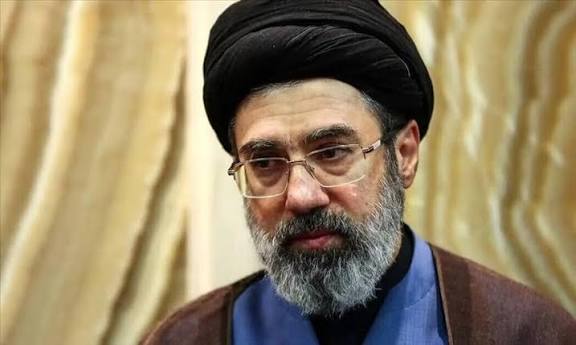
Iran has appointed Mojtaba Khamenei as the country’s new supreme leader following the reported killing of his father, Ali Khamenei, according to Iranian state media cited by Al Jazeera.
The decision was announced on Sunday by the Assembly of Experts, the clerical body responsible under Iran’s constitution for selecting the country’s highest authority. In a statement carried by state outlets, the assembly said Mojtaba Khamenei had been chosen after what it described as a “decisive vote”.

The body called on the Iranian public to rally behind the new leadership and safeguard national unity. It also urged citizens — particularly scholars and intellectuals in seminaries and universities — to pledge allegiance to the incoming leader.
The appointment comes just days after the death of Ali Khamenei, who had led the Islamic Republic since 1989. He was reportedly killed on 28 February during a joint air operation by the United States and Israel targeting leadership sites in Tehran, as tensions escalated in the region.
His death sparked intense speculation about who would succeed him, with Mojtaba Khamenei widely viewed as a leading contender despite unease among some political and religious figures over the prospect of power passing from father to son.
A mid-ranking cleric, Mojtaba is believed to have close ties to the Islamic Revolutionary Guard Corps and has long been regarded as an influential figure behind the scenes within Iran’s political establishment.
Before the official announcement, former US president Donald Trump had publicly criticised the possibility of Mojtaba taking power, reportedly describing him as a “lightweight” and arguing he should not play a role in determining the country’s future leadership.
Under Iran’s political system, the supreme leader holds the highest authority in the Islamic Republic, wielding ultimate influence over state policy, the armed forces and the judiciary.
Mojtaba Khamenei’s elevation marks one of the most significant political transitions in Iran in decades, unfolding against a backdrop of heightened regional tensions following his father’s death.




Related posts:
 I Must Be A Part Of Your Decision To Select Your Next Supreme Leader – Trump Tells Iranians
 FG Reaffirms Commitment to Protect Nigerians in Iran, Activates Evacuation Plans
 Uncertainty Surrounds Iran’s Leadership as Succession Plans Emerge After Khamenei’s Death
 Man dies After Cutting Off His Private Part in Los Angeles