Uncertainty surrounds the leadership of Iran following reports that the country’s Supreme Leader, Ali Khamenei, was killed during one of the first missile strikes launched by the United States and Israel amid escalating conflict with Iran.
Khamenei, who was 86 and reportedly in poor health at the time of his death, had led Iran since 1989, making him the country’s second Supreme Leader after Ruhollah Khomeini, the founder of the Islamic Republic.

According to Iran’s state-linked Mehr News Agency, senior Iranian officials had already prepared succession plans in the event of Khamenei’s death. The agency reported that a decision on his successor has been reached, although “some obstacles” still need to be resolved before the name is officially announced.
A member of the Assembly of Experts, Hojjatoleslam Jafari, acknowledged that the delay in selecting the next leader has created anxiety among the public.
“The delay in electing the third leader is bitter and unwanted for everyone, and there is no alternative, so we should not have bad thoughts about our representatives at this difficult time,” he said.
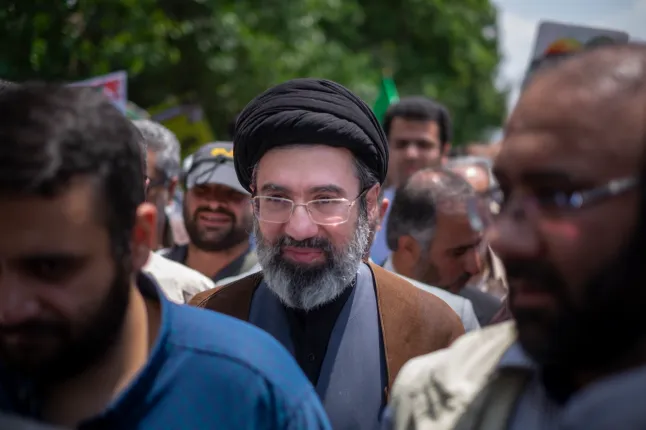
Previous reports by The New York Times indicated that the leading contender to succeed Khamenei is his second son, Mojtaba Khamenei. However, analysts say his possible appointment could generate controversy.
Christian Emery of University College London noted that while Mojtaba is believed to wield considerable influence behind the scenes in Iran, his lack of formal government experience could raise concerns among political and clerical elites.
Emery added that many within Iran’s establishment may also worry that a hereditary succession could undermine one of the core principles of the Iranian Revolution—the rejection of dynastic rule that characterized the era of the Shah.
The BBC previously reported that Ali Khamenei himself had warned against hereditary succession and was believed to have ruled out his son as a potential successor.
Despite that, Mojtaba is thought to maintain strong ties with the powerful Islamic Revolutionary Guard Corps (IRGC), an institution that has gained significant political and economic influence under Khamenei’s leadership. Analysts say those connections date back to Mojtaba’s service during the Iran-Iraq War.
If Mojtaba were to become Supreme Leader, Emery said it would likely preserve the “enormous economic and political power base” developed by the Revolutionary Guards during his father’s rule.
The leadership transition could also heighten security risks. In a post on X, Israel Katz warned that whoever becomes Iran’s next Supreme Leader would be “an unequivocal target for elimination.”
Reports also indicate that the strikes that killed Khamenei claimed the lives of several members of his family, including his wife Zahra Adel, his mother Mansoureh Khojasteh Bagherzadeh, and one of his sons.
Under Iran’s constitution, the Assembly of Experts—an elected body made up of 88 clerics—is responsible for selecting the Supreme Leader through a majority vote. A smaller internal committee typically prepares a shortlist of acceptable candidates before the final decision.
Historically, the process has been swift. When Ali Khamenei himself became Supreme Leader following the death of Ruhollah Khomeini in 1989, the Assembly reportedly approved him within 24 hours.
However, analysts say the ongoing conflict could complicate the process, as a gathering of senior Iranian leaders might present a potential target for further attacks by Israel or the United States.
Other possible candidates include Gholam-Hossein Mohseni-Ejei, Iran’s current chief justice known for his hardline stance during anti-government protests.
Another contender is Hassan Khomeini, the grandson of Ruhollah Khomeini, whose family legacy and connections with both reformist and conservative factions could make him a stabilizing figure.
A third name mentioned is Alireza Arafi, a member of both the Guardian Council and the Assembly of Experts. Observers say Arafi could emerge as a compromise candidate likely to continue Khamenei’s policies while maintaining the influence of the Revolutionary Guards.