



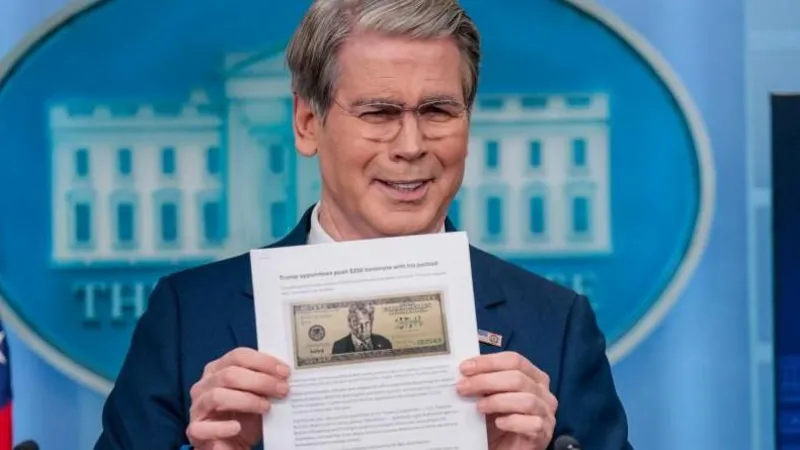
The United States Department of the Treasury is reportedly preparing preliminary designs for a possible $250 bill featuring the face of President Donald Trump, amid discussions in Congress over proposed legislation that could authorize the move.
Current U.S. law prohibits living presidents from appearing on American currency. However, Treasury officials say preparations are being explored in anticipation of a potential legislative change by Congress.

Speaking at a White House briefing on Thursday, Treasury Secretary Scott Bessent confirmed that the department had begun preliminary planning while awaiting any formal action from Capitol Hill.
“It’s all in the hands of Capitol Hill,” Bessent said, adding that the Treasury is simply preparing in advance while remaining committed to existing laws.
He also stated that he did not view the proposal as inappropriate, arguing that it could be symbolic for the president serving during the country’s 250th anniversary celebrations.
The proposal reportedly stems from legislation introduced last year by Republican Congressman Joe Wilson of South Carolina, who called for the creation of a $250 note bearing Trump’s portrait. The bill, however, has yet to be formally considered by Congress.
According to reports by The Washington Post, two political appointees linked to the Trump administration allegedly encouraged the development of draft concepts and mock-up designs featuring the president’s likeness.
If approved by Congress, Trump would become the first living individual to appear on U.S. currency since 1866.
The President has already made history in another aspect of American currency, after the Treasury Department earlier announced that Trump’s signature would appear on newly printed U.S. notes — a departure from the traditional use of signatures belonging to the Treasury Secretary and Treasurer.
Conquest Magazine reports that the proposal has already sparked debate across political circles and social media, with supporters describing it as a patriotic gesture while critics argue it could challenge longstanding traditions surrounding American currency and presidential symbolism.




Related posts:
 Tensions Rise in the Strait of Hormuz Despite Cease-Fire Claims
 Trump Reacts to Tension with Pope Leo Over Iran War and Immigration Policies
 Microsoft Faces £1.7bn UK Class Action Over Cloud Computing Practices
 US to Withdraw 5,000 Troops from Germany Amid Rising Tensions Over Iran Conflict
 Iran Establishes New Authority to Control Strategic Strait of Hormuz
 Alleged Iranian-Linked Extremist Plot Targeted Ivanka Trump – Report