



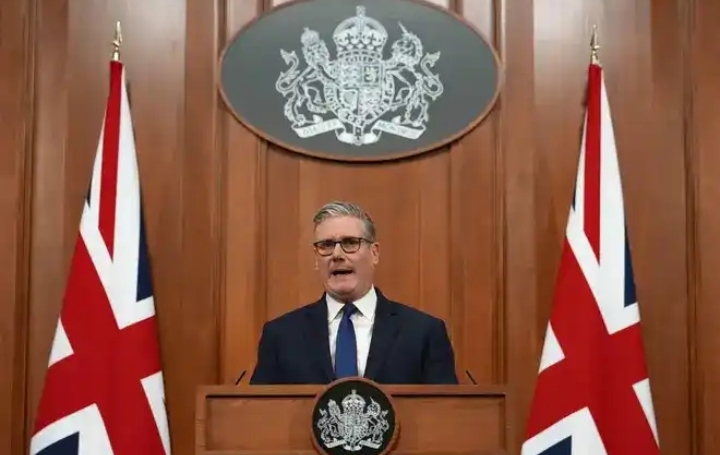
As tensions in the Middle East ripple across global markets, Keir Starmer is positioning Britain at a critical crossroads—one he says could shape the nation’s future for decades.
Speaking from Downing Street, the Prime Minister struck a careful balance between restraint and leadership, making it clear that while the UK will not enter the conflict militarily, it will not remain passive either.

“This is not our war, we will not be drawn into the conflict. That is not in our national interest.”
Rather than boots on the ground, Starmer is betting on diplomacy. Central to that effort is the reopening of the Strait of Hormuz—a vital artery for global oil and gas supplies that has been disrupted by the crisis.
He described restoring access to the route as one of the most effective ways to ease pressure on British households, directly linking foreign policy to the cost-of-living crisis back home.
Leading that diplomatic charge is Yvette Cooper, who is set to convene talks with representatives from 35 countries aimed at restoring freedom of navigation and stabilizing the region.
The global fallout is already hitting British consumers.
Fuel prices are climbing sharply, with diesel and petrol costs surging in recent weeks—raising fresh concerns about inflation and household strain. While there has been a modest drop in the energy price cap to £1,641 for an average household, the broader outlook remains uncertain.
Chancellor Rachel Reeves has warned against sweeping tax cuts like reductions in fuel duty or VAT, cautioning that such moves could worsen inflation.
Instead, she signaled a more targeted approach to any future support:
Past interventions, she noted, disproportionately benefited wealthier households—an outcome the government is keen to avoid repeating.
The UK’s cautious stance has not gone unnoticed.
Donald Trump openly criticized Britain’s decision to stay out of military action, urging affected nations to take a more aggressive approach in securing the Strait.
But Starmer was unmoved.
Reaffirming Britain’s commitment to the North Atlantic Treaty Organization, he emphasized that his decisions would remain grounded in national interest—not external pressure.
“Whatever the noise, I’m going to act in the British national interest.”
This crisis is more than a foreign policy challenge—it’s a test of leadership, priorities, and long-term vision.
For Starmer, the stakes are clear: how Britain navigates this moment will not only determine its role on the global stage but also shape economic realities at home.
In an interconnected world, distant conflicts are never truly distant. And as oil routes tighten and geopolitical tensions rise, the choices made now may echo for a generation.




Related posts:
 Iran’s New Supreme Leader Reportedly Wounded Amid Escalating Middle East Conflict
 Iran’s New Supreme Leader Reportedly In A Coma After Losing A Leg
 Australia Withdraws Non-Essential Officials from Israel and UAE Over Security Concerns
 US Refuelling Aircraft Crashes in Iraq Amid Escalating Iran Conflict
 OSCARS 2026: Full List of Winners And Nominees
 Trump Slams NATO Allies, Describe Them As Cowards Over Strait of Hormuz