



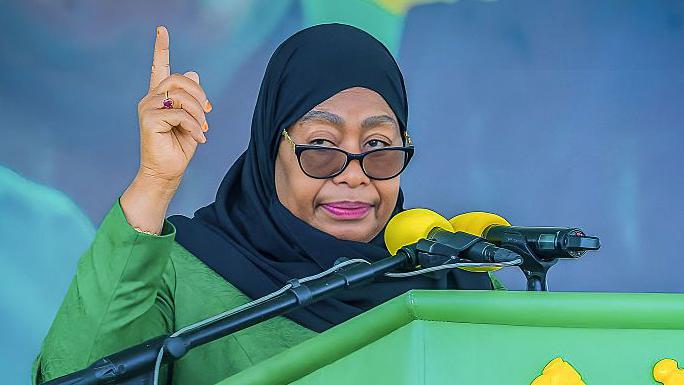
Tanzanian President Samia Suluhu Hassan has announced a major cost-cutting move, reducing her official convoy and directing government officials to travel together in a single bus during official trips.
The decision comes as countries grapple with fuel shortages triggered by the ongoing conflict involving the United States, Israel, and Iran.

Speaking at a swearing-in ceremony on April 8, President Hassan said her future trips would be limited to only essential vehicles—her core convoy, security escort, police, and a backup car.
Traditionally, presidential movements in Tanzania involve large motorcades of more than 30 vehicles, including luxury SUVs and security outriders, often causing traffic disruptions.
In a move aimed at conserving fuel, the president directed that accompanying government officials must now travel together.
“From now on, wherever I go, all officials will travel together in one bus… to cut fuel consumption,” she said.
The decision reflects the wider global impact of the conflict in the Middle East. The blockade of the Strait of Hormuz—a critical route through which about one-fifth of the world’s oil and gas passes—has disrupted supply chains and driven up fuel costs worldwide.
As a result, several countries are implementing fuel-saving measures and rationing policies.
Hassan’s directive is being seen as a symbolic and practical step, signaling a shift toward more prudent use of resources at the highest levels of government.
Beyond cost savings, the move sends a broader message about leadership during times of crisis—highlighting the need for governments to adapt quickly and model responsible behavior.
As global energy uncertainty continues, similar measures could emerge in other countries seeking to manage rising fuel costs and limited supply.




Related posts:
 ADC Raises Alarm Over Handling of Cases Involving Malami and El-Rufai
 Annie Macaulay Speaks on Life After Marriage Crash
 EFCC Arraigns Two FSDH Merchant Bank Ltd Officials For Allegedly Stealing ₦527 Million Via SWIFT Transfers
 Stop Shunning Our Recruitment Exercises — Nigerian Army begs South East Youths