



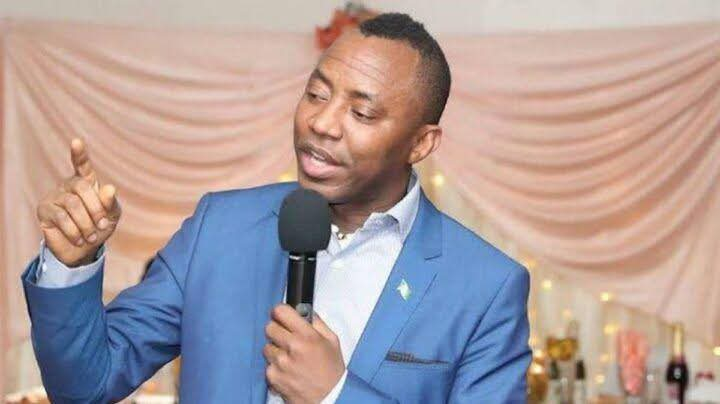
Human rights activist and politician Omoyele Sowore has outlined plans to introduce drone taxis, develop inland waterways and tackle flooding as part of his proposed agenda if elected president in 2027.
Sowore said Nigeria could explore emerging transportation technologies while investing in waterways to ease road congestion, particularly in Lagos, where traffic and flooding remain persistent challenges.

Speaking during an interview, the presidential hopeful proposed dredging a waterway linking the Lagos Lagoon to Epe, saying the project would provide an alternative route for commuters and help address drainage problems.
He likened the idea to the waterways of Amsterdam, where canals serve as part of the city’s transport network.
According to Sowore, the proposed route would enable residents to travel from the lagoon to Epe by water, avoiding the heavy traffic that often delays motorists on Lagos roads.
He also criticised the state’s drainage infrastructure, arguing that properly developed waterways and dikes could help manage excess water and reduce flooding.
Beyond water transport, Sowore said his administration would encourage companies developing drone taxis to test the technology in Nigeria.
He expressed confidence that Nigerians could begin using the electric aircraft within his first four years in office, arguing that the vehicles could offer an alternative to conventional road transport without requiring traditional airports or helicopter landing facilities at every destination.
Using Lekki as an example, he suggested that drone taxis could make movement between locations faster and more convenient.
Sowore also argued that the technology’s collision-avoidance systems could make it more difficult for kidnappers to target passengers. He cited the use of commercial drones to monitor elections in 2019, recalling how difficult it was for soldiers to intercept some of the devices.
The activist further proposed positioning Nigeria as a major centre for drone taxi manufacturing and transportation, with the aircraft powered by batteries as part of a broader shift towards cleaner energy.
He projected that drone taxis could eventually transport about 200,000 workers to their workplaces in Abuja by 2030 or 2035.
However, the proposed timeline prompted a question from the interviewer, who noted that a president elected in 2027 would complete a first term in 2031.
In response, Sowore argued that infrastructure development should not be limited to the tenure of the administration that initiates it, stressing the need for projects that would serve future generations.
His proposals place emerging aviation technology and water-based transportation at the centre of his vision for addressing Nigeria’s urban mobility challenges, although their implementation would depend on infrastructure development, safety requirements, regulatory approval and funding.




Related posts:
 Court Remands Abuja Pastor, Amos Isah For Allegedly Raping 14 Year Old Girl
 Bandits Behead Abducted Oyo Teacher
 Police Rescue Two Women from Mob Attack in Uyo, Arrest Suspect for Alleged Incitement
 Gunmen Demand ₦100m After Abducting Emir’s Children, Women in Kwara
 Elon Musk Makes History, Become First Person to Surpass $1 Trillion Net Worth
 Kenneth Okonkwo Withdraws Support for Atiku Over Amaechi’s ADC Vice-Presidential Nomination