



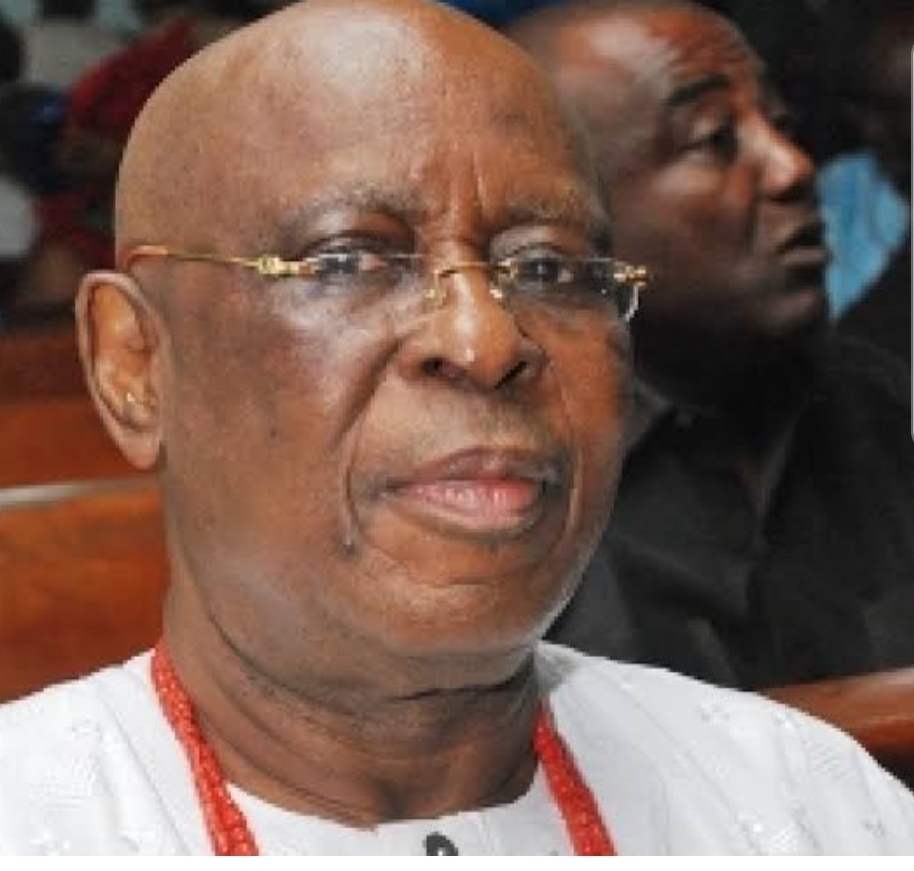
Elder statesman and former Governor of Ogun State, Chief Olusegun Osoba, has alleged that there is a political “gang-up” in Southern Nigeria aimed at weakening President Bola Ahmed Tinubu’s prospects ahead of the 2027 presidential election.
Speaking at the State House in Abuja on Sunday, May 25, Osoba made the remarks shortly after President Tinubu was declared winner of the presidential primaries of the All Progressives Congress (APC).

According to Conquest Magazine, Osoba warned party members against complacency, insisting that the upcoming election would be highly competitive despite narratives suggesting otherwise within the ruling party.
He described claims that President Tinubu faces no serious opposition as misleading, urging the APC to prepare early for what he called the “real election” season.
Osoba further alleged that multiple political interests in the South were aligning in a way that could split regional votes. He specifically referenced the ambitions of former Labour Party presidential candidate Peter Obi, Oyo State Governor Seyi Makinde, and former President Goodluck Jonathan, suggesting their political movements could collectively fragment support in the region.
“I want to appeal to us all ahead of the coming election: let us not be caught off guard… there is a strong gang-up against us,” Osoba reportedly said, urging party loyalists to mobilise strongly ahead of the polls.
He argued that the emergence and positioning of these figures could influence voter distribution in the South, potentially affecting the ruling party’s performance if not strategically managed.
Osoba’s comments come amid early political manoeuvring across party lines, as stakeholders begin positioning ahead of what is expected to be a closely watched 2027 general election cycle.
Conquest Magazine understands that political rhetoric is gradually intensifying within major parties, with attention already shifting toward alliances, regional dynamics, and potential vote-sharing patterns that could shape the outcome of the next presidential race.




Related posts:
 Tinubu Orders Deployment of 100,000 CNG Conversion Kits Nationwide
 Tinubu Itinerary Omits Meeting With Badenoch During UK Visit
 Tinubu Appeals for Gratitude as Nigerians Struggle With Rising Fuel Costs
 Nigeria’s Economy is Growing Faster Than U.S, UK – President Tinubu’s Aide, Daniel Bwala
 Tinubu Signs ₦68.32 Trillion 2026 Budget Into Law
 Akpabio Backs Tinubu Fresh Borrowing Plan for Major Infrastructure Projects