



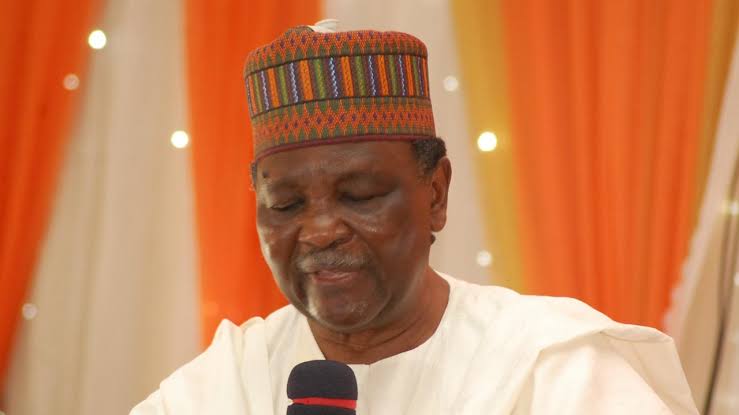
Former member of the Enugu State House of Assembly and ex-South-East spokesman for President Bola Tinubu, Denge Onoh, has criticised former Head of State, General Yakubu Gowon, over recent remarks concerning civilian casualties during the Nigerian Civil War.
Onoh was reacting to a televised interview on Arise Television in which Gowon reportedly reflected on his post-war visit to former Biafran areas and referenced observations of bullet marks on palm trees. Gowon was also quoted as saying that many of the bullets fired during the conflict appeared to have struck trees rather than people.

In a strongly worded response, Onoh rejected the account, arguing that it misrepresents the scale and severity of the war and contradicts widely documented historical records. He insisted that the Nigerian Civil War (1967–1970) resulted in an estimated three million deaths, many of them civilians who died from starvation, disease, and the broader humanitarian impact of the conflict.
He stated that reducing the war’s impact to such anecdotes undermines the documented suffering of affected communities, particularly in the South-East, where widespread malnutrition, displacement, and civilian casualties were recorded.
“Reducing these horrors to bullets harmlessly striking palm trees does not withstand basic scrutiny,” Onoh said, adding that such interpretations ignore the scale of the humanitarian crisis that defined the period.
Onoh further questioned earlier narratives surrounding the war, including its characterization as a “police action,” arguing that such framing diminishes accountability and the lived experiences of victims. He noted that while General Gowon’s post-war “No Victor, No Vanquished” policy and the Reconstruction, Rehabilitation, and Reconciliation (3Rs) programme were important steps toward national healing, they must be matched with full acknowledgment of civilian suffering.
Drawing comparisons with international examples, Onoh referenced post-conflict apologies and reconciliatory gestures by leaders in other countries, suggesting that Nigeria should not shy away from similar honest reflection.
He concluded by calling for what he described as a sincere apology to the Igbo people for the suffering endured during the war, stressing that historical accuracy is essential to national unity.
Conquest Magazine will continue to follow public discourse surrounding Nigeria’s civil war history and ongoing conversations on reconciliation and national memory.




Related posts:
 Subair named board chair of the year, as LIRS emerges top revenue agency
 Disu Inaugurates Committee on State Police Implementation
 AGF, Lateef Fagbemi Takes Over Malami, Son’s Trial Following Alleged Terrorism
 I Must Be A Part Of Your Decision To Select Your Next Supreme Leader – Trump Tells Iranians
 FG Reaffirms Commitment to Protect Nigerians in Iran, Activates Evacuation Plans