



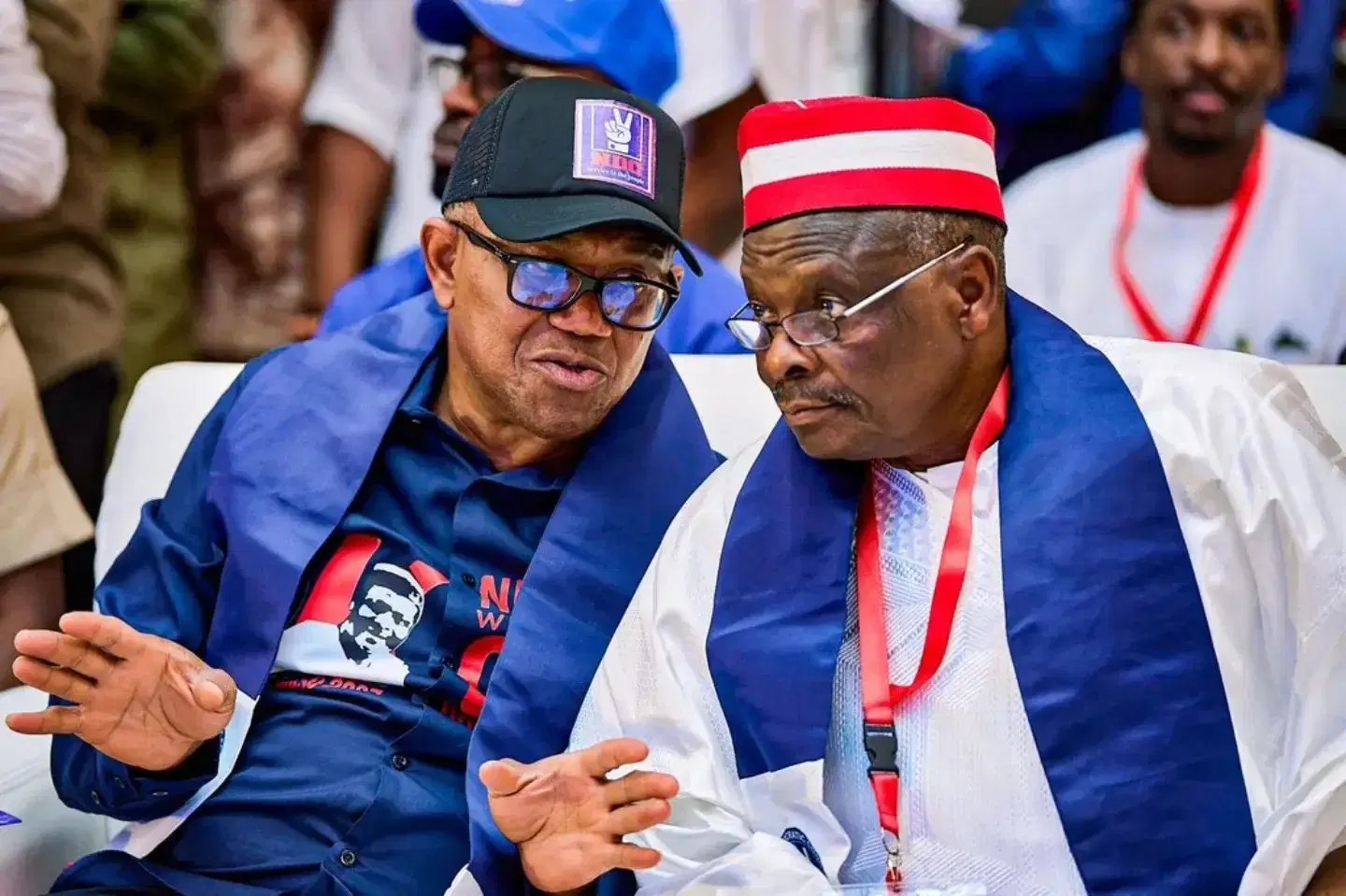
Presidential candidate of the Nigeria Democratic Congress (NDC), Peter Obi, has outlined key governance reforms he intends to pursue if elected in the 2027 general election, including a redefinition of the office of the Vice President as an active partner in administration rather than a symbolic position.
Obi made the remarks on Saturday while accepting his affirmation as the party’s presidential flagbearer and formally announcing Senator Rabiu Musa Kwankwaso as his running mate for the 2027 presidential contest.

In a post shared via his official X (formerly Twitter) account, Obi pledged that his administration would prioritize the rule of law, institutional strengthening, and transparency in public governance.
He emphasized that adherence to constitutional principles would apply universally to both government officials and citizens.
“The rule of law will be fiercely upheld, and adherence to it will be sacrosanct for both government officials and citizens alike, strictly in accordance with our constitutional frameworks,” Obi stated.
The NDC candidate also promised a more inclusive democratic culture that actively respects opposition parties and reduces what he described as partisan interference in governance.
“Our democracy will exemplify true governance of the people, by the people, and for the people, completely free from interference by the ruling party. Instead, we will institutionalize deep respect for opposition parties and foster constructive engagement in governance,” he said.
“Under my leadership, democracy will be pursued with integrity, fairness, and transparency,” he added.
Highlighting the role of his running mate, Obi stressed that the Vice President would not serve as a ceremonial figure but as a substantive partner in governance.
“I will make democracy work, and the Vice President will be a partner, not a spare tyre,” he said, while announcing Senator Kwankwaso as his choice for the position.
Obi expressed confidence that the partnership would support what he described as a broader agenda of national renewal, improved governance structures, and economic transformation.




Related posts:
 NDC Zones Presidential Ticket to the South Ahead of 2026 Elections
Kwankwaso Backs NDC Zoning Decision, Calls for Unity and Electoral Reform
 Fayose Says ADC Faces Defeat Without Peter Obi in 2027 Election
 Kwankwaso Joins ADC After Resigning from NNPP
 Peter Obi Resigns from ADC, Cites Internal Crises And Party Division
 “I’ve Never Run From Anybody” – Peter Obi Dismisses Claims of Avoiding Atiku