



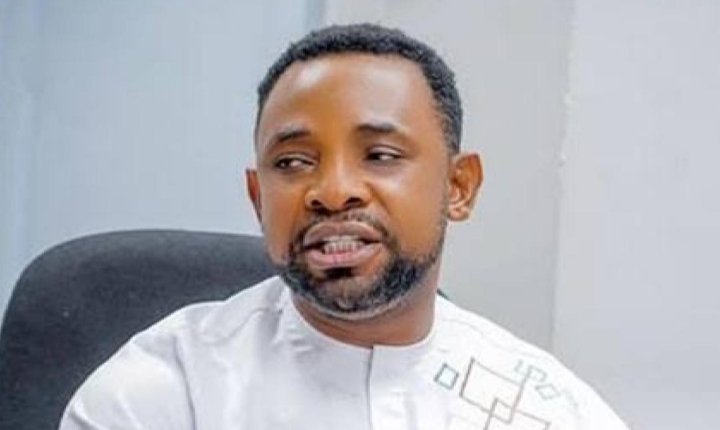
The recent release of Jesam Michael, the embattled CEO of Afriq Arbitrage System (AAS), has sparked renewed controversy surrounding one of Nigeria’s most widely discussed cryptocurrency fraud cases. From allegations of judicial pressure to claims of institutional compromise, the unfolding events raise serious questions about accountability and the fight against financial crimes.
Bail Granted and a Quiet Release
Jesam Michael, widely accused of orchestrating a massive investment fraud through the Afriq Arbitrage System (AAS), was granted bail of ₦300 million by a Federal High Court in Abuja on February 9, 2026. The court required him to present two sureties as part of the bail conditions.

Despite the court’s approval, Michael was initially returned to the Kuje Correctional Centre pending the fulfillment of these conditions. However, sources later revealed that he had been quietly released from the prison facility.
According to insiders familiar with the situation, the release was deliberately kept low-profile to avoid the possibility of immediate re-arrest.
EFCC Prosecutor Withdraws from the Case
Around the same time the bail was granted, another unexpected development occurred in the case. Geraldine Ofulue, a prosecutor with the Economic and Financial Crimes Commission (EFCC) and over 13 years of legal experience, stepped down from handling the case against Michael.
Sources suggested that Ofulue withdrew after facing significant pressure from superiors to compromise the proceedings. According to insiders, she chose to step aside in order to protect her professional reputation.
Another prosecutor has since been assigned to the case. However, allegations have emerged that the replacement may have been financially induced to take over the matter.
The EFCC has publicly denied these allegations, maintaining that no prosecutor was forced to step down due to pressure.
The Charges Against Jesam Michael
Jesam Michael’s legal troubles began in June 2025 when he was arraigned before a Federal High Court in Abuja on a seven-count charge filed by the EFCC.
The charges include allegations of:
- Investment fraud
- Money laundering
- Advance fee fraud
The case centers on a cryptocurrency-based investment scheme that allegedly defrauded investors of approximately $854,416.36 and ₦590 million.
At the time of the arraignment, Justice Obiora Egwuatu ordered that Michael be remanded in Kuje Correctional Centre due to the seriousness of the allegations and the extensive evidence presented by investigators.
The court also noted that ongoing investigations were revealing additional victims, with petitions continuing to arrive from individuals who claimed to have lost money in the scheme.
Justice Egwuatu highlighted another concern during the proceedings: the safety of the defendant.
According to the court, more than 50,000 investors were believed to have been affected by the alleged fraudulent investment operation, raising fears that public anger could pose a security risk.
Allegations of Unlicensed Financial Operations
The EFCC alleges that between September 2022 and June 2023, Michael and his company unlawfully solicited public deposits through advertisements, operating without the necessary licenses required under Nigeria’s Banks and Other Financial Institutions Act (BOFIA) 2020.
Afriq Arbitrage System Limited reportedly offered cryptocurrency investment services to the public without regulatory approval.
Investigators also accuse Michael of laundering ₦590 million believed to be proceeds from the sale of properties connected to illicit activities.
Another charge alleges that Michael convinced an investor, Ladi Musa Audu, to deposit $844,416.36 in USDT after falsely assuring him that the investment was secure and refundable.
Allegations of Police Protection
The case has also drawn attention to alleged protection Michael received from some members of the Nigeria Police Force prior to the EFCC’s intervention.
Victims reportedly filed complaints with the police that were ignored for extended periods. Sources claim that Michael’s connections with senior officers helped shield him from investigation for years.
Some insiders alleged that he maintained close relationships with influential police figures and was even regarded as a philanthropist by some within the force.
Investigations later revealed that his eventual arrest only occurred after significant delays, despite mounting evidence linking him to a large-scale Ponzi-style operation.
Authorities reportedly traced over $1.6 billion in cryptocurrency transactions connected to wallets associated with the scheme, with more than 56,000 investors believed to have been affected.
International Fraud Allegations in the United States
Michael’s alleged fraudulent activities were not limited to Nigeria.
Reports indicate that he previously operated a cryptocurrency platform known as Cryptos OTC Trading Platform (COTP), which targeted investors in California, United States.
In May 2022, the platform abruptly stopped honoring withdrawal requests, citing technical problems. Shortly afterward, the website went offline entirely.
Regulators in California later ordered the shutdown of the platform for violating provisions of the state’s Corporations Code.
According to the state’s Department of Financial Protection and Innovation, the platform exhibited characteristics of a classic Ponzi scheme. Investors were promised daily returns of around 3%, and participants were encouraged to recruit new members through referral incentives.
After claiming that the platform had been hacked, the operators ceased communication with investors. Many victims reportedly never recovered their funds.
Influence from Behind Bars
Even while detained, Michael was reportedly able to exert influence from within the prison system.
Leaked audio recordings allegedly captured him discussing payments to police officers in order to detain his former lawyer, Obeten Okoi, over a property dispute involving ₦68 million.
Okoi denied the allegations, while Michael’s brother publicly stated that the disputed properties had already been transferred to Michael.
Sources close to the investigation suggested that Michael’s true grievance may have stemmed from suspicions that the lawyer leaked information about his financial operations—information that eventually led to his arrest and prosecution.
A Case That Raises Broader Questions
The unfolding saga of Jesam Michael and Afriq Arbitrage System highlights deeper concerns about regulatory oversight, institutional integrity, and the risks associated with unregulated cryptocurrency investment schemes.
With tens of thousands of investors reportedly affected and allegations of influence within law enforcement agencies, the case continues to attract public scrutiny.
As legal proceedings continue, many victims and observers are watching closely to see whether the Nigerian justice system will ultimately hold those responsible accountable.




Related posts:
 Meet Nigeria’s ‘Dubious Grandma’: Controversy Trails 70th Birthday Plans
 Rival APC Factions Hold Parallel Congresses in Benue, Produce Two Chairmen
 Galatasaray President, Dursun Ozbek Hails Victor Osimhen
 Man dies After Cutting Off His Private Part in Los Angeles
 Court of Appeal Dismisses Ondo Governor’s Appeal Over Eligibility Case