



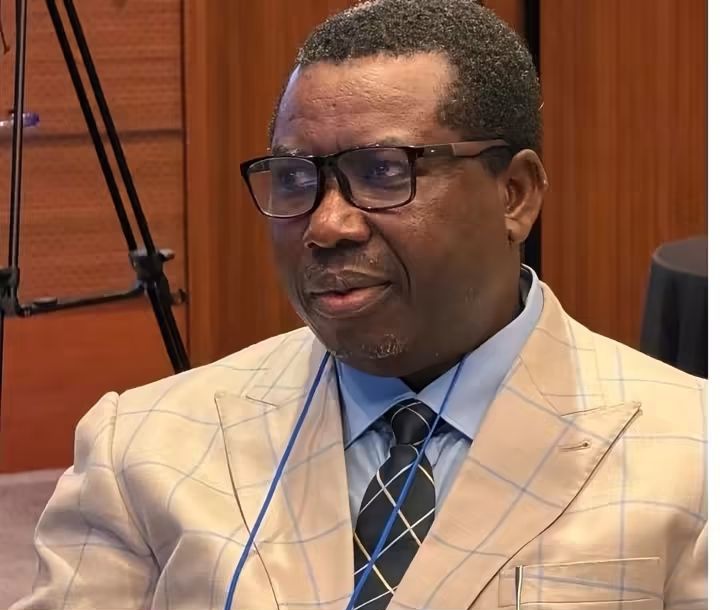
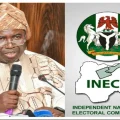
The Chairman of the Independent National Electoral Commission (INEC), Joash Amupitan, has admitted that inaccurate election results, including figures involving over-voting, were uploaded to the commission’s Result Viewing Portal (IReV) during the 2023 general election.
Amupitan, however, said the major challenge with Nigeria’s election result management system was not at the polling units but at the collation centres, where results were processed and declared.

He made the disclosure on Thursday in London at a high-level dialogue titled ‘Nigeria’s 2027 Elections: Democratic Trajectory and Regional Stability Beyond the Ballot’.
The INEC chairman acknowledged that controversies surrounding the 2023 elections had severely damaged public confidence in the electoral body, leaving it with a trust deficit from which it was yet to fully recover.
“We found that the core problem of election result management and declaration in Nigeria is not even at the polling unit—it is at the collation centres,” he said.
“In 2023, there were instances of inaccurate results or results with over-voting being uploaded onto IReV.”
Amupitan said the commission had since introduced stricter validation measures to prevent inaccurate figures from being uploaded to the portal.
According to him, the new safeguards are designed to ensure that results that fail to meet the required accuracy standards at the polling unit cannot proceed to IReV.
“If a result is not accurate at the polling unit, it will not go to IReV at all,” he stated.
He appealed to Nigerians to have confidence in his leadership, assuring them that INEC was working towards delivering free, fair and credible general elections in 2027.
Amupitan, who assumed office in October 2025, said the commission had used elections conducted since his appointment to identify operational challenges and improve its accreditation, voting and result management processes.
He listed the governorship elections in Anambra and Osun states, the Federal Capital Territory (FCT) Area Council elections, the Ekiti governorship election and 16 legislative by-elections among the polls through which INEC had tested and strengthened its operations.
“Nigerians must trust me because I have conducted off-cycle elections, and observers agree that the recent election in Osun State marked a clear improvement,” he said.
He also noted that Anambra and Osun had previously experienced prolonged and inconclusive elections, but INEC was able to declare results in both states a day after voting under his leadership.
On preparations for the 2027 general election, the INEC chairman disclosed that the commission had considered introducing an entirely new electoral technology but eventually opted to upgrade its existing infrastructure because of the limited time available before the polls.
He said INEC was also constructing climate-controlled storage facilities across the states to address technical problems experienced with the Bimodal Voter Accreditation System (BVAS), which he attributed partly to extreme heat and poor storage conditions during the 2023 elections.
According to him, the commission has procured additional BVAS devices and reduced the maximum number of voters assigned to each machine from 1,250 to 850.
Amupitan also called on Nigerian youths to remain actively involved in the democratic process, urging them to resist disinformation and play a responsible role in safeguarding the country’s democracy.




Related posts:
 Appeal Court Bars INEC from Recognising Mark-Led ADC Congresses
 INEC Denies Portal Access to Nafiu Gombe, Backs David Mark-led ADC
 INEC Considers Mock Presidential Election to Test Readiness for 2027 Polls
 2027: PDP Submits Jonathan’s Name to INEC
 INEC to Deploy 1.4m Personnel For 2027 Elections
 2027 Elections: INEC, EU Raise Alarm Over AI-Driven Fake News