



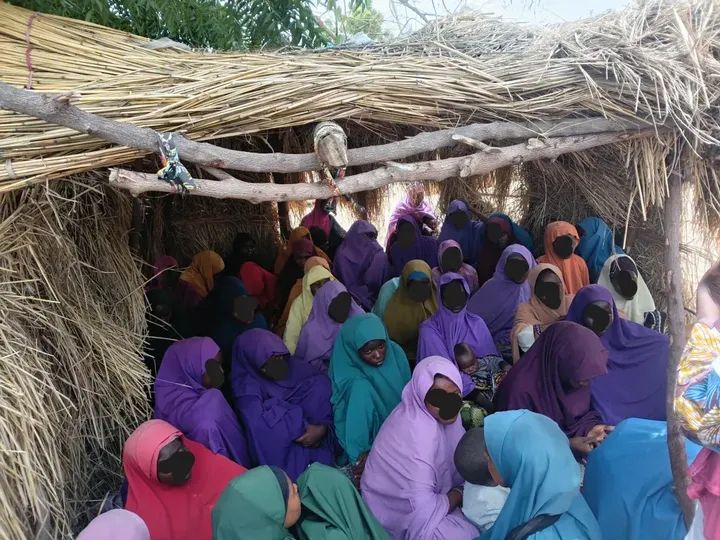
Young women who were married off as teenagers in Tashan Kangele community, Maiduguri, Borno State, have appealed to the government to expand access to education and give them a second chance to pursue their dreams.
The women, who were married between the ages of 13 and 16, said access to education would not only help them become financially independent but also enable them to support the education and wellbeing of their children.

Speaking with our correspondent in Maiduguri on Sunday during a media engagement organised by the Participatory Communication for Gender Development Initiative (PAGED), several of the women said they were either unaware of existing adult education opportunities or unable to access them because of distance and financial constraints.
They called on the government to establish more learning centres, increase public awareness and address transportation challenges that prevent married women from returning to school.
For 22-year-old Fatima Umar, education has become a personal priority after a difficult experience in marriage.
Umar, who was married at 16 and is now divorced with a son, said her marriage eventually broke down after she expressed her desire to return to school and build a career like her co-wife.
“I got divorced because my husband got married to a second wife who is a working-class lady. Impressed by my co-wife’s achievement, I told my husband that I wanted to go to school and work like my co-wife. That led to a fuss which subsequently separated us,” she said.
Despite the setback, Umar said she was determined to rebuild her life through education.
“I already have a son. My wish is to return to school to be a working-class woman so that before I turn 30, I will be done with school and earning for myself,” she said.
Umar said her education stopped at Primary Five, adding that she felt she had not gained enough from the limited schooling she received.
“I want to go to school. I crave education,” she said.
Another participant, 18-year-old Maryam Abba, said she had never attended school before being married at 14. She now has two children.
“I am 18 years old. I got married at the age of 14. I now have two children. I have never been to school,” Abba said.
She added that she would gladly take up an opportunity to learn if one became available.
“If there is a means for me to go back to school, I will be glad because it will help me to care for my children and for them to also be educated,” she said.
Abba said many women in the community were unaware of whether adult or second-chance learning centres existed nearby.
“I am aware there are schools for married people, but I don’t know if we have it in this town,” she said.
For Aisha Usman, marriage came shortly after the death of her mother.
Usman said she was only 13 when she was married to a family member and had since struggled to find the opportunity to resume her education.
“I was 13 when I was married off. When I lost my mum, I was married off to a family member, a cousin precisely,” she said.
Her immediate goal, she added, was simply to learn how to read and write well enough to help her children.
“I just want to return to school to learn how to read so that I can teach my children. I have spoken to my husband about it; he just said God will make a way for it,” she said.
‘The cycle must be broken’.
Programme Director of PAGED, Umi Bukar, warned that the continued exclusion of girls and women from education could have serious long-term consequences for northern Nigeria.
Bukar said the large number of married adolescent girls who had been denied access to education remained a major concern, particularly as more girls continued to face similar barriers.
“The huge number of married adolescent young girls that have been denied education is just a lot. And the funny thing is that there are more young girls coming up and many of them still don’t have access to education,” she said.
She argued that women’s education must become a greater priority in Northern Nigeria, warning that failure to address the problem could deepen existing social challenges.
“In Northern Nigeria, women’s education is not given priority at all. The insurgency we have faced in the past is not going to be child’s play compared to the future because, if these girls are not educated, how will they help their own children to be educated?” Bukar asked.
She said PAGED was also changing its approach by creating platforms where women could speak directly about the challenges affecting their lives.
“We want them to speak out more for themselves so that as we have more voices, it will become difficult for the government to ignore,” she said.
“These are the mothers for the nation. If they don’t benefit from education, their children may also not benefit and the circle will continue, and then we will be in bigger trouble than we are in right now,” Bukar added.
For the women of Tashan Kangele, however, the message is simple: it is not too late to learn.
After years in which marriage and motherhood took priority over schooling, they now want the opportunity to return to the classroom, build independent lives and ensure their children have the educational opportunities they were denied.




Related posts:
 FG Introduces Learner ID to Track Pupils, Tackle Dropout Crisis
 Rescued Chibok Girls Set to Graduate, Marking Victory of Education Over Terror
 BREAKING: Students Seeking NCE Admission No Longer Need UTME — FG
FG Launches AI-Powered Education Data Platform to Track Nigerian Students
 FG Raises Alarm as 75% of Nigerian Children Cannot Read Properly by Age 10
 Argentina Ends Free Hospital Care For Non-Resident Foreigners Under Milei