



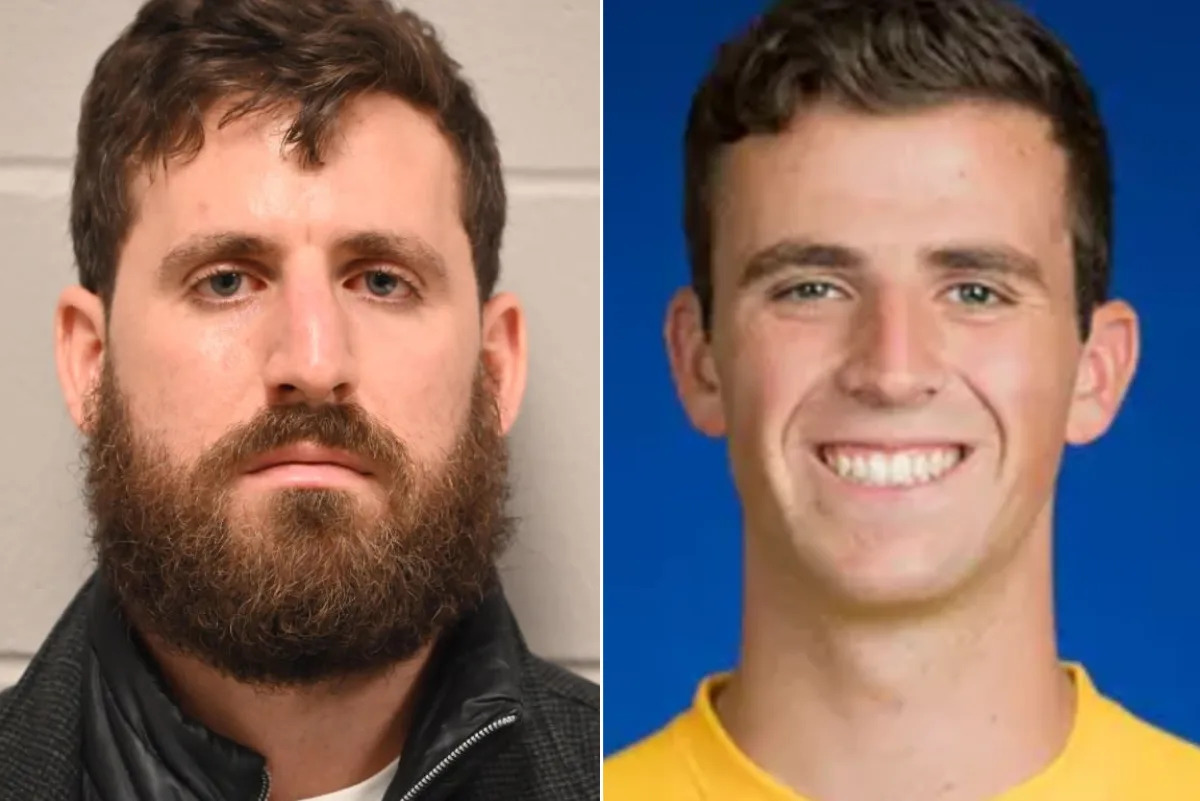
A former footballer at the center of a widely reported criminal case in New Jersey has been found dead in his prison cell in what authorities are treating as an apparent suicide.
Matthew Hertgen, 31, was discovered unresponsive in his cell at Mercer County Jail on May 8, 2026, according to the Mercer County Prosecutor’s Office. Officials have not yet released an official cause of death, and an autopsy report is still pending.

Hertgen had previously been convicted in connection with the killing of his younger brother, Joseph Hertgen, 26, in February 2025 at their apartment in Princeton. The case drew widespread attention due to its brutality and the defendant’s later mental health defense.
During the investigation, authorities alleged that Matthew Hertgen attacked his brother with multiple weapons inside the home before setting fire to property at the scene. Police said he later contacted emergency services himself, reporting a body inside the residence and allowing responding officers to enter, where he was taken into custody.
The case proceeded through court hearings in which forensic experts testified that Hertgen suffered from severe psychiatric illness, including reported delusions and hallucinations. A forensic psychologist told the court he experienced “prophetic and divine visions” and believed he was acting under a distorted sense of purpose connected to apocalyptic beliefs.
In May 2026, the trial concluded with Hertgen found not criminally responsible for murder by reason of insanity. He remained in custody at Mercer County Jail following the verdict.
Officials confirmed that Hertgen had previously attempted self-harm while in custody shortly after his arrest, raising concerns about his mental health during detention.
His death on May 8 came on the same day his trial concluded, according to court records. Authorities have not indicated any foul play, but investigations are ongoing.
Hertgen is survived by his parents and his older brother. In a public obituary, the family described him as a person who “struggled with severe and profound mental health issues” in later years, while also expressing forgiveness and remembrance of his earlier life. The family also requested donations to NAMI Mercer, a mental health advocacy organization supporting residents affected by mental illness.
As the investigation continues, Conquest Magazine will follow developments surrounding both the circumstances of his death and broader discussions on mental health care within the criminal justice system.




Related posts:
 Gwagwalada Speaker, Aide Die in Fatal Auto Crash Along Abuja-Lokoja Highway
 BREAKING: APC Disqualifies 14 House of Rep Aspirants After Screening Exercise
 NYSC Doctor Dies in Zamfara Just Days Before Completion of National Service
 ‘Bandits Need Kidnap Money to Fund War’ — Ahmad Gumi
 Kano Teacher Accused of Sexually Abusing Four Sisters
 Sierra Leone Receives Migrants Deported From United States Amid Immigration Crackdown