



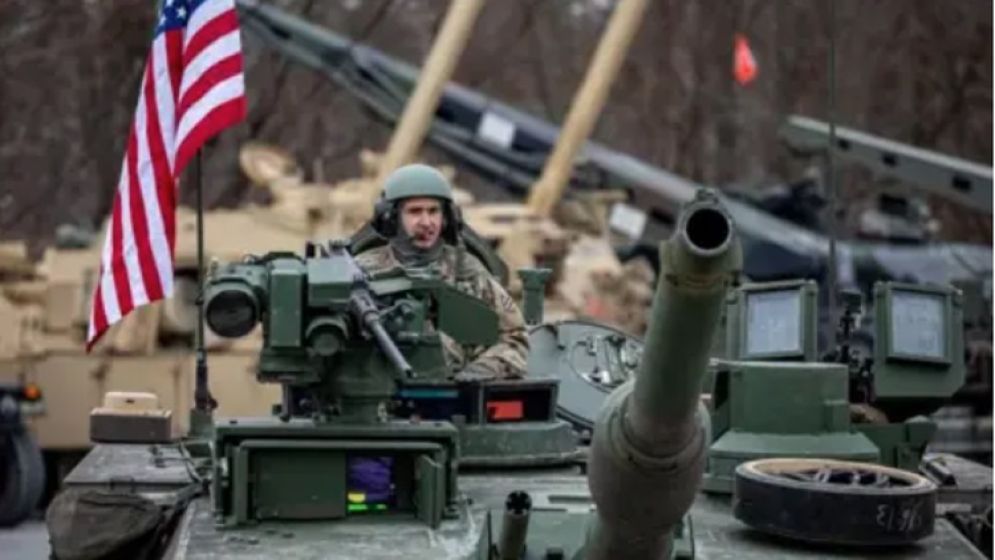
At Conquest Magazine, growing uncertainty within the transatlantic alliance is drawing global attention, as NATO moves to assess the implications of a planned reduction of United States troops stationed in Germany.
The North Atlantic Treaty Organization (NATO) confirmed it is working closely with Washington to better understand the decision to withdraw approximately 5,000 troops, a move announced by the Pentagon amid rising geopolitical tensions linked to the ongoing Middle East conflict.

Pentagon spokesman Sean Parnell stated that the withdrawal process is expected to unfold over the next six to twelve months. In response, NATO officials подчеркнули the broader implications for shared security responsibilities across the alliance.
“This adjustment underscores the need for Europe to continue to invest more in defense and take on a greater share of the responsibility for our shared security,” NATO spokeswoman Allison Hart said.
The development comes at a time of visible strain between key Western allies. A public disagreement recently emerged between former U.S. President Donald Trump and German leader Friedrich Merz, after Merz suggested that Iran was “humiliating” Washington during ongoing negotiations. The diplomatic friction has been compounded by Trump’s announcement of plans to raise tariffs on European Union vehicles from 15 percent to 25 percent, citing what he described as the bloc’s failure to meet prior trade commitments.
As of December 2025, more than 36,000 U.S. troops were stationed in Germany, making it one of the largest American military deployments in Europe. By comparison, Italy hosts approximately 12,600 troops, while Spain has around 3,800.
German officials have responded cautiously. Defence Minister Boris Pistorius noted that the reduction was “to be expected,” while Foreign Minister Johann Wadephul stated that Berlin remains prepared and actively engaged in consultations with NATO partners.
Despite the anticipated drawdown, German authorities подчеркнули the continued strategic importance of U.S. military infrastructure in the country. Wadephul emphasized that critical installations such as Ramstein Air Base remain essential to both U.S. and European security operations and are not subject to negotiation.
The announcement has also raised concerns among senior U.S. lawmakers. Senators Roger Wicker and Mike Rogers warned that reducing troop levels could risk “sending the wrong signal” to Russian President Vladimir Putin, particularly at a time when European nations are still scaling up their defense capabilities.
Trump has consistently argued that European allies must assume greater responsibility for their own security and has previously threatened broader reductions in U.S. troop presence across the continent. He also suggested that further withdrawals from Italy and Spain could be considered, criticizing both countries’ contributions to shared defense efforts.
As discussions continue, analysts say the decision could mark a pivotal moment for NATO’s future structure, potentially accelerating Europe’s push toward greater military independence while testing the resilience of long-standing alliances.




Related posts:
 Trump Slams NATO Allies, Describe Them As Cowards Over Strait of Hormuz
 Trump Mocks Macron, Questions NATO Support Amid Iran Conflict
 Trump Says He Warned Netanyahu Against Striking Iranian Gas Facilities
 U.S. Man Arrested Over Alleged Threats to Kill President Donald Trump
 Trump Speaks on His Rage With NATO and the Greenland
 King Charles’ U.S. State Visit to Proceed Despite Security Concerns