



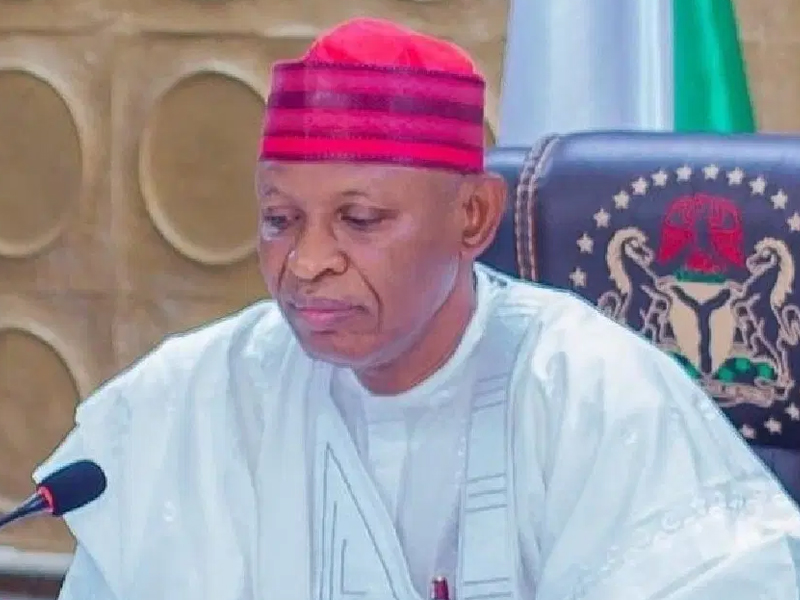
Political tensions in Kano State have intensified following allegations by Governor Abba Kabir Yusuf that his former deputy, Aminu Abdussalam, attempted to orchestrate his removal from office.
Speaking while hosting a group of supporters in Kano, Yusuf expressed surprise over the circumstances surrounding Abdussalam’s exit, noting that he had not even seen an official resignation letter from his former deputy. He maintained that his administration had committed no wrongdoing to warrant such actions.

“Today, the deputy governor who came with us on the same ticket is no longer with us… I have not even seen his resignation letter, what concerns me with it?” Yusuf said. “Whatever made him act that way was an attempt to remove me and take the position, but God did not allow it.”
Abdussalam’s departure comes against the backdrop of impeachment moves initiated by the Kano State House of Assembly—moves that were ultimately withdrawn following his resignation, adding another layer of intrigue to the unfolding political drama.
The governor also raised concerns about how his former deputy was treated within the Kwankwasiyya political movement, suggesting that Abdussalam may have been sidelined despite his political aspirations.
“The deputy governor who left, hoping to secure that ticket… why not give him the ticket? Is that not a betrayal of him?” Yusuf queried.
Addressing criticisms surrounding his own political decisions—including his exit from the New Nigeria Peoples Party (NNPP)—Yusuf argued that recent developments have revealed deep-seated divisions and what he described as acts of betrayal within the political fold.
“Kwankwasiyya members were not even informed before the decision to leave the NNPP was taken… so were they betrayed or not?” he asked.
According to the governor, his decision to leave the party was guided by the need to protect the interests of Kano residents and prevent political uncertainty.
“We saw the direction the party was heading and offered advice, but it was ignored… we left because we did not want to put millions of Kano residents in uncertainty,” he explained.
Yusuf further criticised what he described as the elevation of new political figures over long-standing members within the movement, questioning the rationale behind such decisions.
Despite the ongoing political turbulence, the governor reassured residents that governance remains on track. He disclosed that credible individuals have already indicated interest in filling the vacant deputy governorship position, signaling efforts to stabilise the administration amid the crisis.
As the situation continues to unfold, observers say the developments could have significant implications for Kano’s political landscape and the future of key political alliances in the state.




Related posts:
 AGF, Lateef Fagbemi Takes Over Malami, Son’s Trial Following Alleged Terrorism
 Nigeria Poor Because Leaders and Citizens Celebrate Corruption – Peter Obi
 Tinubu Itinerary Omits Meeting With Badenoch During UK Visit
 2027: Makinde, Bala Meet Kwankwaso, Obi as PDP Crisis Deepens
 Labour Party Zones 2027 Presidential Ticket to Southern Nigeria