



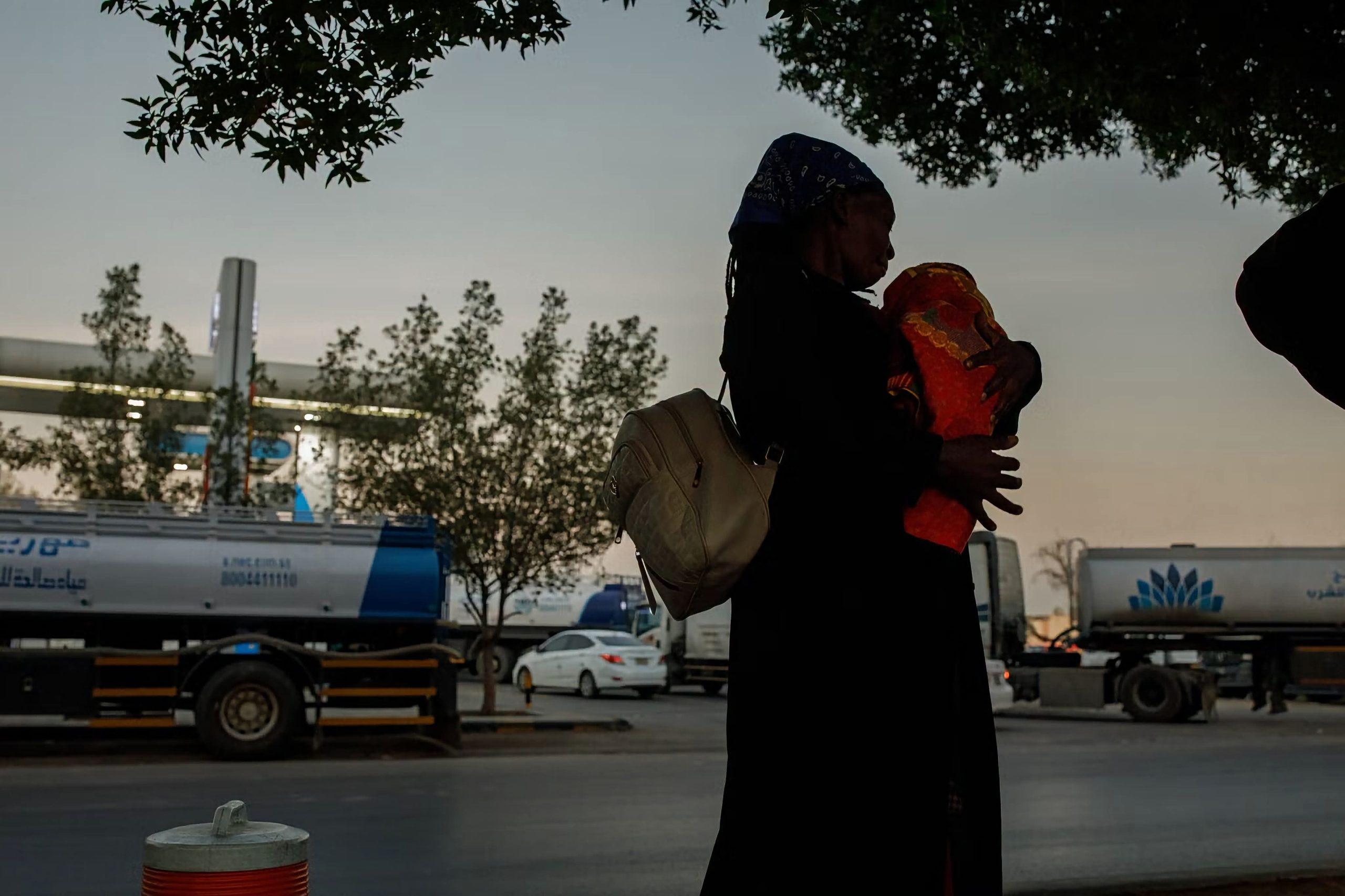
A 40-year-old Kenyan domestic worker, Esther Wanja Muthoni, has been sentenced to 100 lashes by a Saudi Arabian court for having sex outside marriage after giving birth to a child in the kingdom.
The judgment, delivered in October, has left Muthoni fearing for her safety as she struggles to secure permission to return to Kenya with her one-year-old son, Abudy.

According to a report by The New York Times on Tuesday, Muthoni had spent more than a year trying to leave Saudi Arabia with her child but was unable to do so because of the criminal proceedings against her.
Speaking to the newspaper in a telephone interview last month, she expressed fears about the punishment.
“I am so afraid,” she said.
“I don’t think I can endure those lashes,” she added.
Muthoni, a mother of five, had travelled to Saudi Arabia to work legally as a domestic worker through Maharah Human Resources, a recruitment company in the kingdom.
She reportedly became pregnant following a brief relationship with an Egyptian resident identified only as Mohamud.
She gave birth in August 2025 at her staff accommodation. Court documents reviewed by The New York Times indicated that a supervisor discovered her and took her and the baby to a hospital, where the matter eventually came to the attention of the police.
She was subsequently detained and questioned over the pregnancy.
During police questioning, Muthoni reportedly explained that the child’s father had left Saudi Arabia. The court documents did not provide his surname.
Although she was later released from police custody, she was allegedly denied access to her staff accommodation and a shelter, leaving her without a place to stay.
She eventually found refuge at a petrol station in Riyadh, which had become a meeting point for migrant mothers hoping to leave the country with their children.
An earlier investigation by The New York Times had documented the difficulties faced by East African domestic workers who became pregnant in Saudi Arabia, particularly the bureaucratic challenges involved in securing legal documents for their children and obtaining permission to return home.
Following the newspaper’s previous report on Muthoni’s situation, Maharah reportedly provided her with accommodation, while the Kenyan Embassy issued travel documents intended to facilitate her departure.
However, the criminal case against her prevented her from leaving the country.
The newspaper also reported that although Muthoni was provided with an interpreter during court proceedings, she did not have a lawyer representing her.
Documents reviewed by the publication contained no indication that she had legal representation throughout the trial.
Although indigent defendants in Saudi Arabia are entitled to state-sponsored legal representation, experts told the newspaper that some criminal proceedings still take place without lawyers, including cases involving offences that carry the death penalty.
In October, a three-judge panel found Muthoni guilty of having sex outside marriage and imposed 100 lashes as punishment under its interpretation of Islamic law.
The judgment reportedly made no indication that authorities had taken action against the child’s father.
Reacting to the sentence, Ekaterina Porras Sivolobova, a labour migration analyst and founder of the non-profit organisation Do Bold, criticised the punishment, describing it as inconsistent with international human rights standards.
“This sentence of flogging does not align with international human rights standards,” she told The New York Times.
She argued that the punishment further undermined Muthoni’s dignity instead of protecting a woman already in a vulnerable situation.
The case has also renewed questions about Saudi Arabia’s judicial practices and its claims of legal and social reforms, particularly following the kingdom’s 2020 announcement of restrictions on flogging.
However, The New York Times noted that court judgments involving morality-related offences were not routinely made public, making it difficult to determine how frequently the punishment was still being imposed.
Saudi Arabia’s judicial system is based on Islamic law, commonly known as Sharia, but the kingdom does not operate with a comprehensive written penal code.
Consequently, judges interpret Islamic law when determining criminal offences and appropriate punishments, leaving some aspects of the justice system open to differing judicial interpretations.
Muthoni did not appeal the October judgment, saying her priority was to return to Kenya and reunite with her other children.
“It is the only way that can take me back home to my children,” she said.
Apart from the 100 lashes, the court also sentenced her to one year of banishment.
According to the newspaper, Saudi regulations generally allow people sentenced to banishment to be relocated to another city within the kingdom when the judgment does not specify a destination.
It remains unclear whether the order against Muthoni means she will be deported to Kenya.
Her exit documents have also expired, further complicating efforts to secure her return home with her son.
The Saudi and Kenyan governments, as well as representatives of Maharah Human Resources, reportedly did not respond to requests for comments from The New York Times.
The newspaper’s earlier investigation also highlighted the difficult conditions faced by East African women recruited as domestic workers in Saudi Arabia, including allegations of physical abuse, sexual violence, withheld wages and abandonment.
It further documented cases of Kenyan women who became pregnant while working in the kingdom and subsequently struggled to obtain birth certificates for their children.
Some diplomats who were expected to assist the women were also accused of neglecting their cases or demanding bribes and sexual favours in exchange for assistance.




Related posts:
 Criminals Get Meeting Details Within Minutes – Governor Radda Raises Alarm Over Security Breach In Katsina
 ₦36 Million Fraud Case: Court Reserves Decision on Blessing CEO’s Bail Request
 Anambra Arraigns Eight Alleged Fake Pastors Under New Homeland Security Law
 MFM Restricts Church Activities to 8pm, Suspends Vigils Over Security Concerns
 Oyo Govt Demolishes Building Used to Hold Adelabu’s Sister, Nephews Captive
 Ndume Urges US Military to Establish Base in Borno to Crush Boko Haram