



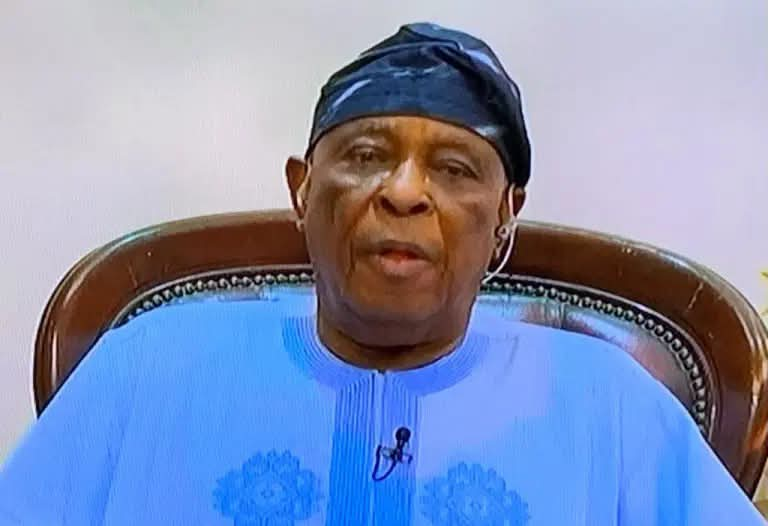
Former Ogun State Governor, Olusegun Osoba, has defended the place of political godfathers in Nigeria’s democracy, arguing that their influence should be limited to offering advice and guidance rather than dictating appointments or interfering in the affairs of elected governors.
Osoba stated this during a podcast conversation with journalist Reuben Abati, excerpts of which were shared on X (formerly Twitter).

The former governor described himself as a political godfather but said he had deliberately maintained a hands-off approach towards the administration of his political successors, preferring to offer counsel rather than impose his personal choices on them.
According to him, he has never nominated anyone for appointment as a commissioner, special adviser, councillor or local government chairman in Ogun State.
“I agree, I’m a godfather. But one thing that is working for me in my state is that I hardly interfere. I counsel and advise him. I have never nominated one person into his government,” Osoba said.
He explained that political godfathers who insist on deciding government appointments risk undermining the authority of elected governors and creating unnecessary divisions among their supporters.
Osoba noted that when a governor is pressured to appoint one individual from a group of political loyalists, those left out could feel sidelined, potentially generating resentment within the administration.
He also warned that individuals appointed on the recommendation of a political godfather could face suspicion from other members of the government, particularly if they are perceived as representing the interests of someone outside the administration.
Reflecting on his time in office, Osoba recalled adopting an arrangement that allowed each federal constituency in Ogun State to nominate candidates for commissioner positions.
He said he requested one nominee from each federal constituency, after which he personally assessed their qualifications and assigned portfolios based on their credentials.
The former governor said the arrangement helped him manage competing interests and avoid unnecessary pressure from political associates seeking appointments for their supporters.
Osoba, however, maintained that political godfathers have a responsibility to ensure that individuals who worked for a candidate during election campaigns are recognised and rewarded for their contributions.
He stressed that such recognition should not translate into controlling the government or dictating how an elected governor runs the affairs of the state.
“That’s the role of a godfather. I agree, I’m a godfather,” he added.
The former governor also defended the involvement of experienced political elders in the process of selecting candidates for elective positions.
He cited his support for a presidential candidate whom he described as experienced, pointing to the individual’s political background in the Lagos State House of Assembly, House of Representatives and Senate, as well as experience in the corporate sector.
Osoba’s comments have brought renewed attention to the debate over political godfatherism in Nigeria, particularly the extent to which influential political figures should exercise control over elected office holders.
In a democracy, the distinction between offering political guidance and interfering in governance remains a recurring issue in conversations about accountability, leadership and the independence of elected officials.
Conquest Magazine reports that Osoba’s position is that political influence should be exercised through counsel and support, not by dictating appointments or attempting to run an elected governor’s administration.




Related posts:
 Vanessa Trump Reveals Breast Cancer Diagnosis
 Beheaded Oyo Teacher Died Childless Ten Years After Marriage – Family
 NYSC Extends Service Year of 12 Corps Members in Osun State
 497 Stranded Nigerian Migrants Repatriated From Niger Republic Through Jibia Border
 13-Year-Old boy Arrested For Allegedly Raping 4-Year-Old Girl in Niger State
 Time to Wage War Against Kidnapping is Now – Gani Adams to S-West Governors