



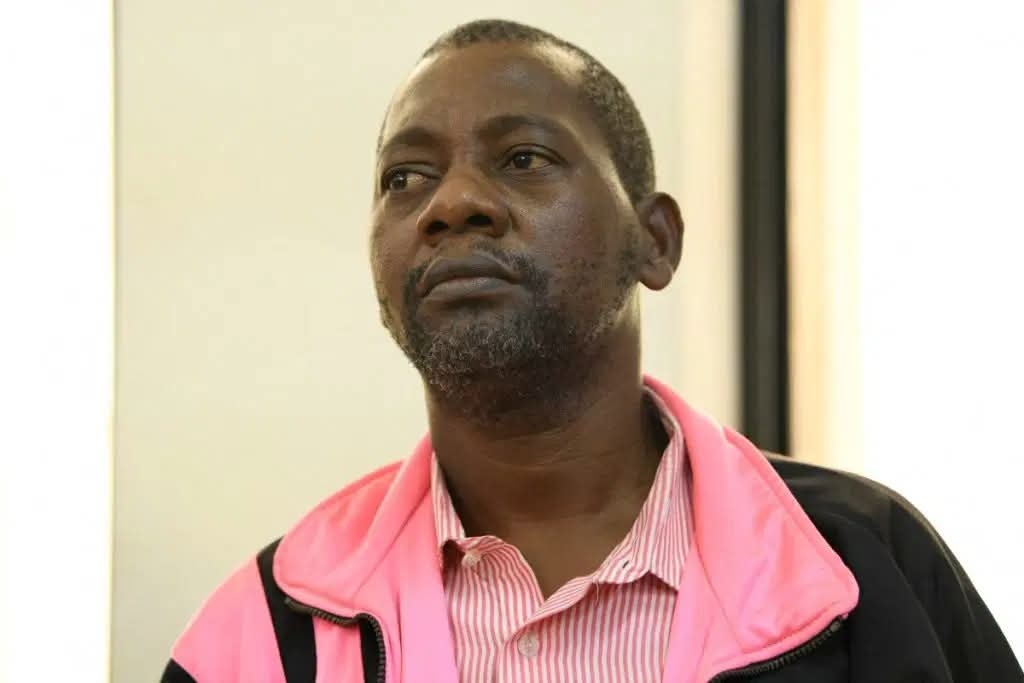
A Kenyan court has convicted self-proclaimed preacher Paul Mackenzie and 28 other leaders of his religious group over the deaths of 191 people, including 190 children, in one of the country’s most horrific cult-related tragedies.
The victims were allegedly encouraged to starve themselves and their children to death in the belief that doing so would allow them to “meet Jesus” in what became known as the Shakahola Forest Massacre.

According to the BBC, the verdict was delivered on Monday by Justice Diana Mochache at a court in the coastal city of Mombasa, following an eight-hour judgement.
All the defendants had pleaded not guilty, repeatedly maintaining that nobody had been forced to die.
In her ruling, Justice Mochache said Mackenzie’s followers regarded him as “Jesus’s mouthpiece”, highlighting the influence he wielded over members of the group.
The court also heard disturbing accounts of how violence was allegedly used against those who refused to comply with the group’s fasting practices.
One of Mackenzie’s co-accused told the court that followers who resisted the directive to fast were to be forced into compliance.
According to the testimony, anyone who “resisted the directive to fast must be forced to go to heaven through kicks and blows”.
The judge further revealed that burials in the forest were referred to as “weddings”, with those who died described as people who “were celebrated as having wedded with Jesus”.
Gruesome discoveries in Shakahola Forest
The scale of the tragedy emerged in 2023, when hundreds of bodies were discovered in shallow graves in Shakahola Forest, inland from the coastal resort town of Malindi.
The discovery shocked Kenya and attracted international attention, prompting investigations into the activities of Mackenzie and his followers.
The court heard that 17 men from a neighbouring town had been recruited to dig shallow graves in the forest. Some were reportedly paid as little as $8 (£6) a day for their work.
One of the gravediggers, identified as James, told the BBC that the remains found in the graves included very young children.
“Every grave we found had at least three bodies,” he said. “Some of the remains were of children as young as a few weeks old.”
He recalled one particularly disturbing discovery involving 12 children buried together.
“We once found 12 bodies of children in a line inside a grave. It was massive, the bodies were arranged like clothes. One on top of another,” he said.
The workers also reportedly found children whose hands and legs had been tied, with their bodies wrapped in bedsheets.
Another gravedigger, Salim Karisa, said some of the victims were familiar to residents of neighbouring Shakahola town because members of the religious group regularly visited to buy supplies and collect water from the River Galana.
“We would sometimes carry people on our motorbikes into the forest. But it was so planned and secretive that nobody could tell what was happening inside,” Karisa said.
Many of the recovered bodies were so badly decomposed that identifying the victims became difficult. Court records reportedly listed several of them as “unknown male child”, with burial locations and discovery dates used to distinguish individual cases.
How Mackenzie built his religious following
Mackenzie established Good News International Ministries in 2003 and spent the following 16 years building a substantial following through church branches across Kenya.
The ministry also operated a television station, Times TV, which broadcast his sermons from Malindi.
His teachings reportedly discouraged formal education and medical treatment, while he described digital identity cards as “the mark of the devil”.
After the church’s main branch closed in 2019, Mackenzie relocated to Shakahola Forest and encouraged his followers to join him there.
Among those who followed him was Peter Shukrani, 23, who moved to the forest with his mother. He had joined the church at the age of eight and regarded Mackenzie as his spiritual father.
Mackenzie’s son, Dan Paul Mackenzie, who said he worked as a cameraperson for the ministry, recalled how services were organised.
“The children would sit at the back, adults in the middle, and everyone would sing worship songs all morning,” he said.
According to him, his father usually began preaching at noon, with some sessions involving what was described as the casting out of demons.
Survivor recounts ordeal in the forest
Shukrani said life in the forest initially appeared ordinary, with members living in mud houses scattered across the expansive area and observing periods of fasting.
“We lived a quiet normal life, fasting for a few days then having a small meal,” he said.
However, his health deteriorated after he became ill in an environment where medication was reportedly prohibited.
Shukrani said his mother discarded the medicines he needed because she believed prayer alone could heal him.
“My mother would throw away all the medicine I was supposed to take because she believe that only God could heal me,”.
He remained bedridden for weeks before he was eventually rescued, saying he believed he would have died without intervention.
“My mother believed Pastor Mackenzie’s doctrine that medicine was evil. I would have died if I wasn’t rescued from Shakahola forest,” he said.
The first bodies were discovered by local herders in March 2023, by which time hundreds of people were believed to have died.
Karisa said some victims were so weakened by starvation that they died while being carried out of the forest.
“We would carry someone out of the forest but they were so frail that they would die in our arms,” he said.
Survivor still defends preacher
Despite the accounts of deaths and suffering, Shukrani continued to defend Mackenzie before the verdict, describing him as someone who cared for him.
“Mackenzie didn’t force anyone to fast. People made those choices by themselves because of their beliefs. I still love him and he is still my pastor,” he said.
Dan Mackenzie, however, argued that his father should be held responsible for the deaths because of the authority he exercised over the religious group.
“He was the leader, he was someone who they were looking [up to]. So he is a murderer of mass killing,” he said.
The convictions mark a significant development in the investigation into the Shakahola tragedy, which exposed the devastating consequences of alleged extremist religious teachings and the vulnerability of followers who placed their trust in a spiritual leader.




Related posts:
 I Longs To See Jesus One Day – Nicki Minaj Speaks About Christian Faith
 The Job We Give Jesus In Nigeria Is Too Much— Peter Obi
 Sierra Leone Receives Migrants Deported From United States Amid Immigration Crackdown
 Court Arraigns NURTW Chieftain Over Alleged Murder of Dispatch Rider in Lagos
 “Billionaire Oil Mogul Allegedly Caught With Lover’s Used Sanitary Pad Hidden in Pocket”
 Romanian Tourist Arrested After Allegedly Kissing British Child In Magaluf Hotel Pool