



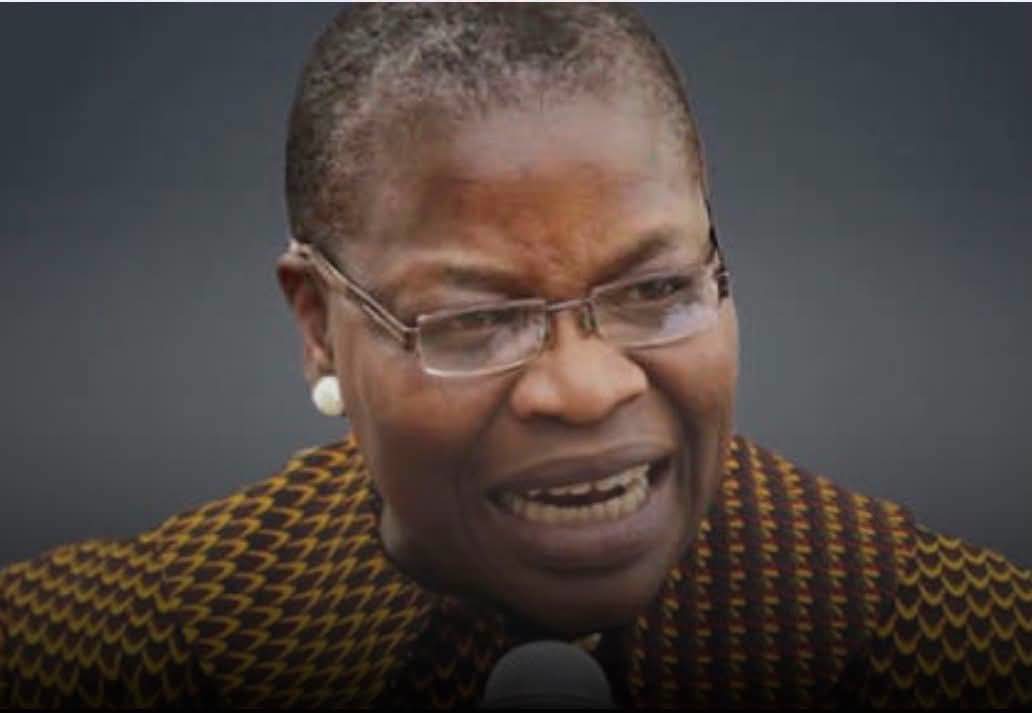
Former Minister of Education, Oby Ezekwesili, has criticised Nigeria’s political and economic system, saying the country often rewards questionable wealth while citizens who engage in productive activities struggle to prosper.
Ezekwesili made the remarks during an interview on News Central’s 60 Minutes with Mr. Kay, where she examined the country’s leadership recruitment process and its impact on governance.

According to the former minister, Nigeria’s political system has evolved in a way that can make a lack of character an advantage for those seeking positions of influence.
She said the process of selecting leaders had, in many ways, been shaped by those who previously controlled the levers of power.
“The processes for leadership recruitment have in many ways been designed in the image of those who have held the levers of power,” she said.
Ezekwesili argued that when people in positions of authority deliberately create barriers for individuals of good character, the result is a political culture where integrity becomes a disadvantage.
“When you have that kind of a distortion where bad behaviour is what your political system rewards, there will be a market for bad behaviour. And then good behaviour is punished,” she said.
The former minister also questioned the widespread perception that government remains one of the easiest routes to wealth in Nigeria.
She challenged Nigerians to examine the sources of wealth among the country’s richest individuals and determine how many built their fortunes through genuine productive activities.
“Look at just bringing all the people who are wealthy in our country today and try to trace their wealth to any productive activity. None. Maybe a few,” she said.
Ezekwesili further alleged that some individuals accumulate significant wealth after gaining access to government, with society often celebrating their success rather than questioning how their fortunes were acquired.
“This is what grounded the Nigerian society,” she said, adding that similar challenges exist across much of Africa.
She urged citizens to reject apathy and demand better governance instead of waiting for circumstances to change on their own.
According to her, good governance does not happen by chance but requires deliberate planning and systems designed to produce the desired outcome.
“Nothing happens that is not made to happen,” she said. “To get good governance is a design. You have to design for you to then end up with good governance. If you don’t design for good governance, you will have the kind of governance that we have.”




Related posts:
 Nigerian Man Charged After Allegedly Using Fake Boarding Pass to Board US Flight
 Preach The Good News Of Tinubu’s Success – First Remi Lady Tells Nigerians
 Federal Government Repatriates 66 More Nigerians From South Africa
 16-year-old Nigerian Boy Dies After Entering Lake in UK
 FG Rules Out Electricity Tariff Hike, Says Subsidies Will Continue
 Aliko Dangote to Donate $11.7 Billion of Fortune to Charity, Daughter Reveals