



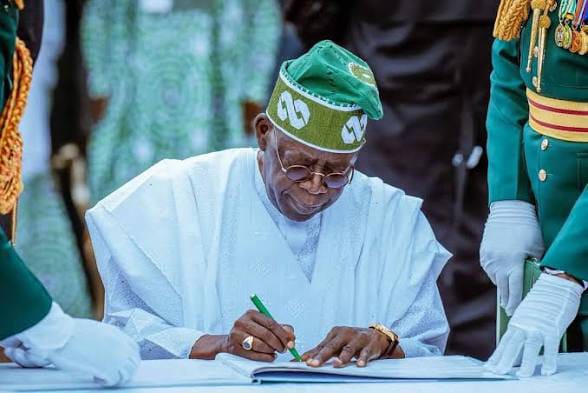
The Federal Government is facing growing criticism after details emerged that ₦8.05 billion has been allocated for the construction, renovation and equipping of churches and mosques in the 2026 national budget.
The spending, uncovered by public accountability organisation Tracka, revealed that ₦1.91 billion was earmarked for seven church-related projects, while ₦6.14 billion was allocated to 52 mosque-related projects across different parts of the country.

According to the budget details, the funds will cover the construction and rehabilitation of places of worship, the installation of solar power systems, the provision of boreholes, the purchase of musical equipment for churches, carpets for mosques, Islamiyya schools, imam residences and other religious facilities.
However, the disclosure has sparked concern after some of the projects were found to have been assigned to government ministries and agencies whose statutory responsibilities have no direct connection to religious affairs. Critics argue that such allocations raise serious questions about transparency, accountability and the effective use of public funds.
The controversy comes at a difficult time for Nigeria’s economy, with the country grappling with a widening fiscal deficit, rising public debt, persistent inflation and inadequate funding for essential sectors such as healthcare, education, road infrastructure and water supply.
Tracka questioned the rationale behind committing billions of naira to religious projects while many communities continue to struggle without basic public amenities. The organisation maintained that every naira spent particularly funds obtained through borrowing should provide clear and measurable benefits to citizens.
Public policy experts have also criticised the allocations, arguing that borrowing to finance projects with limited direct economic impact is difficult to defend at a time when the government is under pressure to improve public services and stimulate economic growth.
They further warned that assigning religious projects to agencies outside their official mandates could weaken oversight, reduce transparency and create opportunities for political patronage, urging the government to prioritise investments that deliver broader public value and improve the lives of ordinary Nigerians.




Related posts:
 FG Declares March 19 and 20 Public Holidays for Eid-ul-Fitr
 Federal Government Responds to Plateau Palm Sunday Attack, Reassures Public on Security
 FG Seeks Fresh $1.25bn World Bank Loan
 FG Denies Plans to Introduce New Taxes on Telecom Services and Petroleum Products
 FG Says Seven Suspected Terrorist Commanders Arrested at Katsina Airport After Returning from Hajj
 FG Debunks ₦8.8tn Missing Funds Allegation, Explains IMF Report