



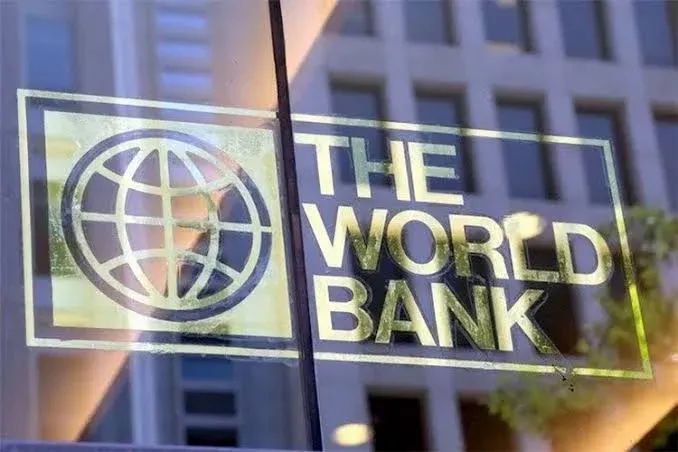
The World Bank has approved a fresh $1.25bn loan for Nigeria under its Nigeria Actions for Investment and Jobs Acceleration (NAIJA) programme, despite growing public concern over the country’s rising debt profile and repeated calls for the Federal Government to curb external borrowing.
The approval was announced on Wednesday alongside the launch of the World Bank’s new Country Partnership Framework for Nigeria, which will guide the institution’s support for the country from 2026 to 2032.

According to the World Bank, the six-year strategy is designed to accelerate job creation by promoting private sector-led economic growth, while supporting reforms aimed at improving infrastructure, agriculture, healthcare and digital connectivity.
“The World Bank Group has endorsed a new Country Partnership Framework for Nigeria spanning 2026–2032, setting out a strategy to create more and better jobs at scale by unlocking private sector-led growth,” the bank said in a statement.
It added that it had also approved the Nigeria Actions for Investment and Jobs Acceleration Development Policy Financing operation to support the country’s transition towards a more inclusive and competitive economy.
The latest approval comes only weeks after reports that the Federal Government was seeking another $1.25bn World Bank facility triggered criticism from many Nigerians, who questioned the country’s growing dependence on foreign loans despite persistent economic hardship.
Many citizens have argued that successive external borrowings have yet to translate into tangible improvements in living standards, with millions still battling high inflation, unemployment and the rising cost of living.
The World Bank, however, maintained that Nigeria’s recent macroeconomic reforms had begun yielding positive results, including stronger economic growth, higher government revenues, improved external reserves and renewed investor confidence.
Under the new partnership framework, the institution plans to help provide electricity access to 32 million Nigerians, expand broadband connectivity to 58 million people, improve health and nutrition services for 40 million citizens, and support about 9.5 million farmers.
The programme will also focus on strengthening human capital development, boosting agricultural productivity and expanding access to reliable energy and digital infrastructure.
The World Bank’s Country Director for Nigeria, Mathew Verghis, said the institution’s priority was to ensure that recent economic reforms translate into meaningful improvements in the lives of ordinary Nigerians.
“Our new Country Partnership Framework provides the strategy for how the World Bank Group will support Nigeria over the coming years, with a strong focus on helping to create more and better jobs, particularly by enabling private sector-led growth.
“The recent macroeconomic gains have been critical to help stabilise the economy. Translating improved macroeconomic conditions into better living standards will require addressing the structural constraints to spur private sector investment and job creation,” he said.
According to the bank, the $1.25bn Development Policy Financing operation will support reforms aimed at strengthening Nigeria’s competitiveness and laying the foundation for sustainable economic growth.
The reforms include deepening capital markets, modernising regulations for the digital economy and e-governance, accelerating power sector reforms to improve electricity access, reducing trade barriers in line with Nigeria’s commitments under ECOWAS and the African Continental Free Trade Area, improving access to quality agricultural seeds and boosting domestic revenue generation.
The International Finance Corporation’s Divisional Director for Nigeria, Dahlia Khalifa, said sustained reforms could help unlock greater private sector investment and job opportunities.
“Nigeria’s long-term growth potential will be shaped by the economy’s ability to attract investment, raise productivity, and unleash private sector job creation, building on the capital of a rapidly growing population,” she said.
Also speaking, the Vice-President and Chief Financial Officer of the Multilateral Investment Guarantee Agency, Ed Mountfield, acknowledged that although reforms had opened new opportunities for investors, significant risks remained.
“Nigeria’s reform progress is creating important opportunities for private investment, but risks remain for investors. MIGA’s role is to help manage these risks through guarantees and political risk insurance, so that investors can step in with confidence,” he said.
The newly approved facility is the second-largest single World Bank loan secured by the administration of President Bola Tinubu, following the $1.5bn Reforms for Economic Stabilisation to Enable Transformation Development Policy Financing approved in June 2024.
Meanwhile, figures released by the Debt Management Office show that Nigeria’s debt to the World Bank increased from $17.81bn at the end of 2024 to $19.89bn as of December 31, 2025, representing an increase of $2.08bn, or 11.7 per cent.
The data showed that debt owed to the International Development Association rose from $16.56bn to $18.51bn, while obligations to the International Bank for Reconstruction and Development increased from $1.24bn to $1.38bn over the same period.
Overall, the World Bank accounted for 38.36 per cent of Nigeria’s total external debt stock of $51.86bn at the end of 2025, reinforcing its position as the country’s largest multilateral creditor.




Related posts:
 IMF Warns of Prolonged Global Fuel Shortages as Strait of Hormuz Crisis Disrupts Energy Markets
 Tinubu Government Warns World Bank Over Delayed Loan Approvals
 End Terrorism in 90 Days or Quit’ — Adeboye Sends Strong Message to Security Chiefs
 Pregnant Woman Sentenced to Life Imprisonment for Killing Mother of Five in Alabama
 Oyo Police Dismiss Reports of Release of Abducted Pupils, Teachers
 Gunmen Demand ₦100m After Abducting Emir’s Children, Women in Kwara