



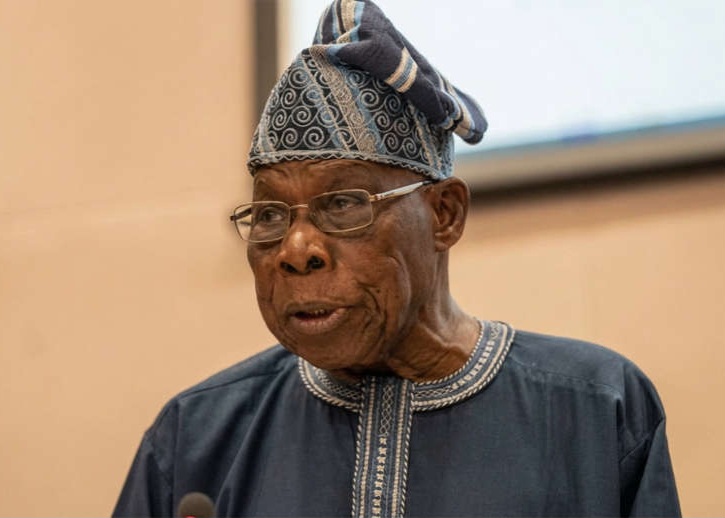
Former Nigerian President Olusegun Obasanjo has reiterated his long-standing position that Nigeria’s state-owned refineries will never function effectively again, citing structural inefficiencies, poor maintenance, and corruption, Conquest Magazine reports.
His remarks come as the Nigerian National Petroleum Company Limited continues efforts to secure technical partners to operate the Port Harcourt, Warri, and Kaduna refineries.

Speaking during an interview on Sony Irabor Live aired on April 25, Obasanjo stressed that public-private partnerships remain the most viable model for managing major national assets. He pointed to the success of the Nigeria Liquefied Natural Gas project, where private investors hold a majority stake, as a working example.
“One project that has not been destroyed by the government in Nigeria is the NLNG,” he said, arguing that government-run enterprises have historically struggled due to inefficiency.
Obasanjo revealed that during his presidency, he made multiple attempts to привлечe Shell to manage Nigeria’s refineries, but the company declined. According to him, Shell cited several concerns, including low profitability in the downstream sector, the relatively small size of Nigeria’s refineries compared to global standards, and poor maintenance practices.
He added that corruption within the system was another major deterrent for potential investors.
The former president also recounted a deal involving Aliko Dangote, who had offered $750 million to acquire a 51 percent stake in two of the refineries. Obasanjo said he welcomed the move, describing it as a “miracle,” but the agreement was later reversed by his successor, Umaru Musa Yar’Adua, following pressure from NNPC officials.
Obasanjo expressed disappointment over the reversal, arguing that the refineries would have performed better under private sector management.
He further claimed that Nigeria has spent approximately $16 billion on refinery rehabilitation over the years—an amount he noted is close to the estimated $20 billion reportedly invested by Dangote in building Africa’s largest refinery.
Obasanjo concluded that without fundamental structural changes and reduced government control, the refineries are unlikely to become operational in any meaningful way, reinforcing his call for deeper private sector involvement in the country’s oil and gas industry.




Related posts:
 At 89, I’m Hale And Hearty – Says Former Nigerian President, Olusegun Obasango
 Lagos Grandma Matchet to Death While Stepping Out of Her Bathroom
 Air Force Officer Arrested After Shooting Civilian Dead in Port Harcourt
 Jehovah’s Witnesses Adjust Long-Standing Blood Rule for Followers
 Igbinedion School Bullying Suspects Arrested, to be Charged as Juveniles in Court
 FG Introduces Learner ID to Track Pupils, Tackle Dropout Crisis