



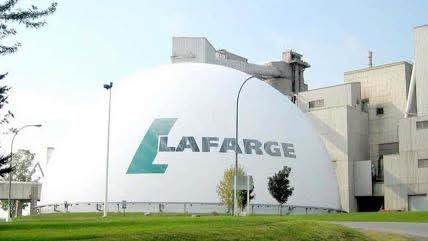
A French court has found Lafarge Cement guilty of financing terrorist groups, including the Islamic State and Al-Qaeda’s Nusra Front, ruling that the company paid at least $6.5 million to insurgents in Syria between 2013 and 2014.
Delivering judgment on Monday, presiding judge Isabelle Prévost-Desprez sentenced Lafarge’s former chief executive, Bruno Lafont, to six years in prison. Eight other employees were also found guilty of aiding and abetting terrorist activities in northern Syria through payments made in several instalments.

The court heard that Lafarge made the payments to ensure the continued operation of its cement plant during the Syrian conflict, which had severely impacted the country’s economy.
Lafarge admitted the funds were intended to keep the plant running without disruption.
“It is clear to the court that the sole purpose of the funding of a terrorist organisation was to keep the Syrian plant running for economic reasons. Payments to terrorist entities enabled Lafarge to continue its operations,” Ms Prévost-Desprez said.
She further noted that the arrangement amounted to “a genuine commercial partnership with IS”.
The court was told that part of the payments was used to secure safe passage for employees based in Manbij, who had to cross the Euphrates River to reach the plant.
Lafarge argued that it chose not to shut down operations out of concern for staff welfare, as most of its workforce comprised local employees.
“We could have washed our hands of it and walked away, but what would have happened to the factory’s employees?” said former deputy managing director Christian Herrault.
Mr Herrault was sentenced to five years in prison, while Firas Tlass, a former Syrian employee who delivered the funds to the militants, received a seven-year sentence in absentia.
The court also fined Lafarge $1.3 million, granting prosecutors’ request for the maximum financial penalty.
In response to the ruling, Lafarge said: “Lafarge SA acknowledges the court’s finding, which concerns a legacy matter involving conduct that occurred more than a decade ago and was in flagrant violation of Lafarge’s Code of Conduct,” according to Reuters.
The case mirrors a similar 2022 legal battle in the United States, where the company agreed to pay $777 million as part of a plea deal over illegal payments to terrorist groups in Syria.




Related posts:
 BREAKING: Court Adjourns Alleged Terrorism Trial of Malami and Son to 10 March
 Nigeria May Suffer From US–Israel–Iran Crisis – Hakeem Baba-Ahmed
 BREAKING: Court Acquits Suspended DCP Abba Kyari of 23-Count Asset Declaration Charges
 BREAKING: CAF reschedules 2026 Women’s Africa Cup of Nations to July–August in Morocco