



By Oladele Taiwo
The United States has praised the Nigerian government for securing 386 convictions in terrorism-related cases, describing the achievement as a major step toward justice and accountability in the fight against extremism.

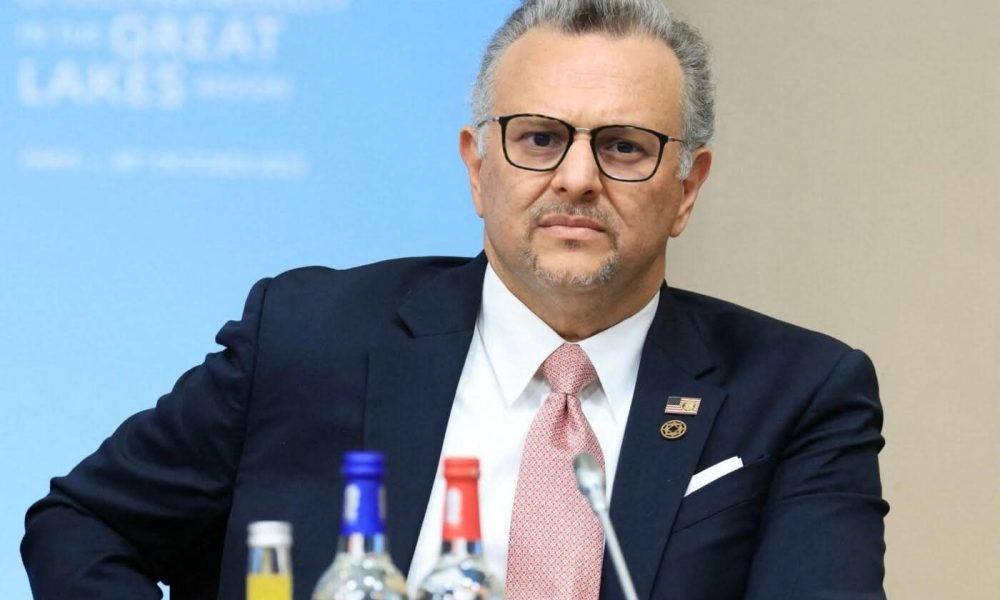
The commendation came from Massad Boulosin, who highlighted Nigeria’s efforts to fast-track long-delayed terrorism trials in a statement shared on X (formerly Twitter) on Sunday.
According to the statement, the U.S. acknowledged the importance of the convictions, particularly in cases that had previously experienced significant judicial delays.
“We welcome the convictions of 386 Islamist militants… and recognise this as an important step toward accountability and justice,” the statement read.
The U.S. also emphasized that transparent and timely legal processes are essential in tackling extremism and strengthening public confidence in judicial institutions.
The convictions were announced by Nigeria’s Attorney-General of the Federation and Minister of Justice, Lateef Fagbemi, following the conclusion of the ninth phase of terrorism trials held at the Abuja Division of the Federal High Court.
Out of 508 terrorism-related cases prosecuted:
- 386 resulted in convictions
- 8 suspects were discharged
- 2 were acquitted
- 112 cases were adjourned to the next phase
Fagbemi noted that the next phase of the trials is scheduled to take place between June 15 and June 18.
The proceedings, which ran from April 7 to April 10, 2026, involved 10 judges and continued despite the Easter vacation period—underscoring the government’s urgency in addressing terrorism cases.
Fagbemi stressed that the inclusion of discharges and acquittals demonstrates Nigeria’s commitment to due process and adherence to the rule of law, even amid intense pressure to deliver justice.
The suspects were arraigned under the Terrorism (Prevention and Prohibition) Act, a key legal framework guiding Nigeria’s counterterrorism efforts.
The latest development comes amid ongoing global scrutiny of Nigeria’s security situation. In late 2025, former U.S. President Donald Trump designated Nigeria a “Country of Particular Concern” under the International Religious Freedom Act, citing violence linked to extremist groups.
However, the Nigerian government rejected the classification, maintaining that the violence is driven by insurgency and criminal activity affecting both Muslims and Christians, rather than targeted religious persecution.
While the convictions mark significant progress, the U.S. has urged Nigeria to sustain judicial reforms and ensure that legal processes remain transparent, fair, and efficient.
As the country continues to confront security challenges, the focus remains not only on prosecuting offenders but also on strengthening institutions that uphold justice and long-term stability.




Related posts:
 ADC Raises Alarm Over Handling of Cases Involving Malami and El-Rufai
 Annie Macaulay Speaks on Life After Marriage Crash
 EFCC Arraigns Two FSDH Merchant Bank Ltd Officials For Allegedly Stealing ₦527 Million Via SWIFT Transfers
 Stop Shunning Our Recruitment Exercises — Nigerian Army begs South East Youths