



After nearly a full day of high-stakes negotiations in Islamabad, the United States and Iran have failed to reach a breakthrough agreement, underscoring the deep divisions that continue to define one of the world’s most complex geopolitical relationships.
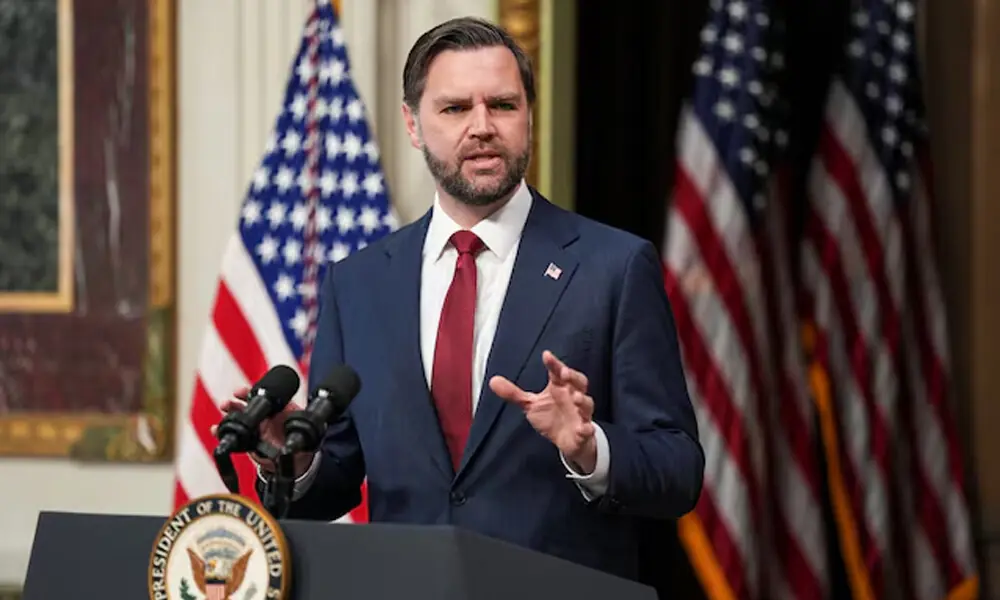
Leading the American delegation, JD Vance described the outcome as unfavorable—particularly for Tehran—stating that Iran declined to accept Washington’s proposed terms. His remarks came shortly before departing Pakistan’s capital, marking the end of what has been the most senior-level engagement between both nations since the 1979 Islamic Revolution.

Despite the apparent deadlock, the conclusion of the 21-hour dialogue does not necessarily signal the end of diplomatic efforts. According to reporting by Al Jazeera, negotiations may continue through indirect or remote channels. Correspondent John Hendren noted that Washington’s decision to send Vance reflects the seriousness with which it approached the talks—suggesting that the door to further engagement remains open.
At the heart of the disagreement are longstanding and sensitive issues. Chief among them is Iran’s control of the Strait of Hormuz, a critical global oil transit route, alongside persistent concerns surrounding Iran’s nuclear ambitions. The United States is reportedly seeking not only assurances that Iran will not develop nuclear weapons, but also guarantees that it will refrain from pursuing the capacity to do so altogether—a demand that significantly raises the stakes of compliance.
These sticking points echo the drawn-out negotiations of the mid-2010s, where similar disagreements extended talks over several years before any consensus was reached. Observers suggest that the current impasse may follow a similar trajectory.
Iran, for its part, has downplayed expectations of an immediate resolution. Speaking through state broadcaster Islamic Republic of Iran Broadcasting, Foreign Ministry spokesperson Esmaeil Baghaei emphasized that a single round of talks was never expected to yield a comprehensive agreement. He reiterated Tehran’s commitment to continued diplomatic engagement, including cooperation with regional partners.
Meanwhile, Pakistan—host of the negotiations—has positioned itself as a key mediator. Ishaq Dar commended both parties for their willingness to engage and urged them to maintain momentum toward a lasting resolution. His remarks highlighted Islamabad’s broader ambition to foster stability and peace in the region.
Although no agreement has been reached, the talks signal a cautious willingness on both sides to remain at the negotiating table. In a geopolitical landscape often marked by escalation, even stalled dialogue can represent a step toward eventual compromise.



