



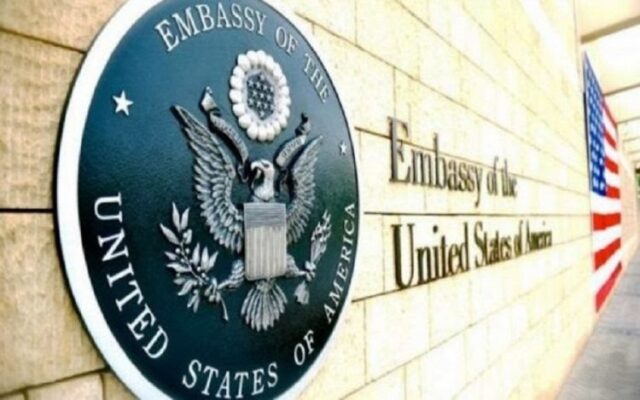
The United States Department of State has raised fresh concerns about Nigeria’s security landscape, authorizing the departure of non-emergency personnel and their families from the U.S. Embassy in Abuja.
This decision, announced in a travel advisory on April 8, 2026, reflects what officials describe as a “deteriorating security situation” across the country. Alongside the evacuation notice, the department urged American citizens to reconsider travel to Nigeria, citing risks such as crime, terrorism, kidnapping, and civil unrest.

Nigeria currently holds a “Level 3: Reconsider Travel” status overall, but conditions are considered even more severe in certain regions. Several states have been placed under “Level 4: Do Not Travel”, the highest warning level issued by the U.S. government.
Notably, Plateau, Jigawa, Kwara, Niger, and Taraba states were newly added to this category, bringing the total number of high-risk states to 23.
According to the advisory, the security situation in many of these areas remains volatile and unpredictable. Issues such as communal violence, armed criminal activity, and kidnapping are widespread, with security operations often occurring without prior notice.
In northern Nigeria, states including Borno, Yobe, and parts of Adamawa continue to face threats linked to terrorism, alongside high rates of crime and abductions. Other northern states—such as Kaduna, Kano, Katsina, and Zamfara—are flagged for civil unrest, banditry, and general instability.
Southern and southeastern regions are not exempt. States like Abia, Anambra, Delta, and Rivers (excluding Port Harcourt) were also highlighted due to rising incidents of kidnapping, violent protests, and organized criminal activity. Authorities warn that crime in these regions is both widespread and increasingly sophisticated.
The advisory emphasizes that U.S. citizens may face heightened risk, as they are often perceived as wealthy and therefore attractive targets for kidnapping and ransom schemes. Violent crimes—including armed robbery and carjacking—remain a significant concern nationwide.
Additionally, the threat of terrorist attacks persists across Nigeria. Public spaces such as markets, shopping centers, hotels, places of worship, and large gatherings are considered potential targets.
Beyond security risks, the State Department also pointed to limitations in Nigeria’s healthcare system. Medical facilities, it noted, are often inconsistent and may not meet U.S. or European standards, further complicating emergency response for travelers.
For those who must travel to Nigeria, the U.S. government advises taking extra precautions. These include enrolling in the Smart Traveler Enrollment Program (STEP) to receive real-time updates, avoiding large gatherings and demonstrations, and establishing personal safety measures—including “proof of life” protocols in case of emergencies.
This latest advisory underscores mounting international concern about Nigeria’s security environment. While the country remains a major economic and cultural hub in Africa, ongoing challenges continue to impact both residents and foreign visitors alike.
As global attention sharpens, the situation raises broader questions about safety, governance, and the path forward for Africa’s most populous nation.




Related posts:
 BREAKING: CAF reschedules 2026 Women’s Africa Cup of Nations to July–August in Morocco
 Actress Sarah Martins Apologizes After Lagos Government Criticism Over Street Cooking
 Police Seal Off Venue for ADC Committee Inauguration in Calabar
 Air Force Officer Arrested After Shooting Civilian Dead in Port Harcourt
 Igbinedion School Bullying Suspects Arrested, to be Charged as Juveniles in Court