



The Federal Government has firmly rejected claims that Nigeria is on the brink of collapse, countering recent warnings from civil society groups with assurances of resilience and ongoing progress in addressing the nation’s security and economic challenges.
The response comes amid growing concerns raised by a coalition of civil society organizations, which pointed to worsening insecurity, economic hardship, and governance issues as signs of deepening national strain. However, government officials insist that such narratives overlook the country’s capacity to recover and reform.

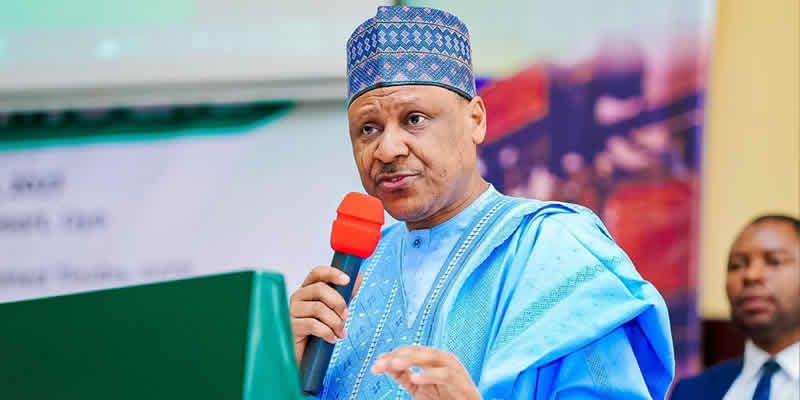
Speaking in Abuja on Wednesday, April 8, during the 81st General Assembly and 23rd Annual General Meeting of the Broadcasting Organisation of Nigeria, the Minister of Information and National Orientation, Mohammed Idris, dismissed what he described as overly pessimistic assessments of the country’s trajectory.
“I want to unequivocally refute the insinuation that Nigeria is on the brink,” Idris said in a statement issued through his media aide, Rabiu Ibrahim. “On the contrary, we are daily exhibiting resilience and tackling our security and economic challenges more decisively.”
Highlighting efforts in the security sector, the minister pointed to ongoing coordinated military operations and enhanced intelligence-sharing among agencies. According to him, these measures have contributed to the neutralisation of bandit groups and the disruption of planned attacks, particularly in parts of northern Nigeria.
He further noted that incidents involving large-scale insurgent control have significantly declined, with improved rapid-response mechanisms being deployed across the country to better protect lives and property.
On the economic front, Idris acknowledged that recent policy decisions have been difficult but maintained that they are yielding positive outcomes. He argued that reforms aimed at stabilising public finances are also fostering greater transparency within the system.
“These decisions, though difficult, are stabilising public finances and creating a more transparent economic environment,” he stated.
The minister also expressed optimism about Nigeria’s position in the global investment landscape, suggesting that recent developments signal renewed confidence among international investors.
“This development confirms that Nigeria is once again a viable destination for global investment,” he added.
While concerns about insecurity and economic pressure persist among citizens and analysts, the government’s stance underscores a broader message: that despite the challenges, Nigeria is not on the verge of collapse, but rather in a phase of recalibration and recovery.
As debates continue, the contrast between official assurances and public sentiment is likely to remain a defining feature of the national discourse.




Related posts:
 Outrage as Lagos Soldier Reportedly kills Yabatech Student
 Lagos Police Ban Covered Number Plates, Restrict Tinted Glass Use
 Saudi Arabia Declares March 20 for Eid-el-Fitr Celebration
 Nigerian Dietitian Struck Off UK Register For Lying on Job Application
 Sport Reporter And Her Three Kids Dies in Fire Accident